Mix-and-match
Explore content in our extensive library and pull it together into your own Jewish ritual booklet that honors and recognizes whatever life has brought your way.
Share a ritual
Add your own original content as a clip to our extensive library - a poem, blessing, or something else entirely. Someone out there is looking for exactly what only you can create.
Support us
with your donation.
Help us build moments of meaning and connection through home-based Jewish rituals.
Mix-and-match
Explore content in our extensive library and pull it together into your own Jewish ritual booklet that honors and recognizes whatever life has brought your way.
Share a ritual
Add your own original content as a clip to our extensive library - a poem, blessing, or something else entirely. Someone out there is looking for exactly what only you can create.
Support us
with your donation.
Help us build moments of meaning and connection through home-based Jewish rituals.
Featured clips
At the rising sun and at its going down; We remember them.
At the blowing of the wind and in the chill of winter; We remember them.
At the opening of the buds and in the rebirth of spring; We remember them.
At the blueness of the skies and in the warmth of summer; We remember them.
At the rustling of the leaves and in the beauty of the autumn; We remember them.
At the beginning of the year and when it ends; We remember them.
As long as we live, they too will live, for they are now a part of us as We remember them.
When we are weary and in need of strength; We remember them.
When we are lost and sick at heart; We remember them.
When we have decisions that are difficult to make; We remember them.
When we have joy we crave to share; We remember them.
When we have achievements that are based on theirs; We remember them.
For as long as we live, they too will live, for they are now a part of us as, We remember them.
We Remember Them by Sylvan Kamens & Rabbi Jack Riemer
Preview
More
In the Time of our Sorrow
By Rachel Kann
My tongue wants to un-gate the flood, it is
an urgent compulsion to spill knotted guts,
in these weeks of banned melody,
my lips wants to rebel,
to howl,
to sing
of my suffering,
of all my shortcomings,
every rejection,
every threat to our collective existence,
the abandonment unabated,
of how my heart is a bitter almond,
spilling with cyanide,
splitting its endocarp,
longing only for the orchard,
of how my heart is a heavy stone,
flack-jacketed,
sallow and sinking in my chest,
how a glut of shrapnel is stuck in my throat,
of how I am blindfolded in love’s minefield,
frozen, unable to navigate the danger
lurking beneath the surface,
hurtful blossoms
lying in night-wait
only to explode,
detonate the light of day,
of the world’s unending
re-dedication to the re-destruction
of temples.
My heart wants to take flight,
transcend the gravity
of this misbegotten planet.
Before the unkindness of ravens and
murder of crows can escape the open moan,
I am circle-dancing,
hand in hand with so many wondrous
warrior women,
with Magda and Miriam,
who came through the dark tunnel of the Shoah,
who are here with me,
present and spilling light.
This is beyond awe,
beyond gratitude.
We weave a grapevine
up the trunk of the almond tree,
we are strengthened by our suffering.
We are indestructible.
This world crushes us,
we refuse to turn poisonous,
dancing and rooting and branching
despite this.
In glorious defiance,
we pour ourselves forward
in honeyed amaretto flooding,
we sweeten the darkness,
light the bitterness.
We kasher every unholy implement
used against us.
We ready them for service
in the holy temple of our most
miraculous dance:
our continued existence.
As we enter a New Year without our loved one, our memories of them and the experiences we shared with them may begin to feel further away. This activity invites us into presence with our memories and creates a physical keepsake we can revisit. You may want to begin collecting memories during Rosh Hashanah, and continue adding to the jar throughout the year.
To start, place a large jar, decorated box or vessel in a convenient location. Next, whenever you have a memory of your loved one, write it down on a slip of paper and place it in the jar. If a memory crosses your mind and you don’t have access to paper, record a voice memo or type it into your phone so you can transfer it to paper later. Your memories can be simple, such as a holiday tradition, your loved one’s favorite food, or of an adventure or experience you shared.
Any time you wish to recall their lives, take a note from the jar. You can also revisit memories at the start of another New Year, when you say Yizkor or Kaddish, each time you visit their grave, or mark their birthday or yahrzeit. You can create a scrapbook with photos that correspond to the memories. You can read the notes together with other family members or friends and then share the story of the memory together. Or, invite several people to share stories at your Rosh Hashanah seder, Yom Kippur break fast or Sukkot gathering.
—
This ritual was adapted by Chloe Nassau, based on a creation from the Center for Loss & Renewal, Rabbi Benyamin Cirlin, LCSW
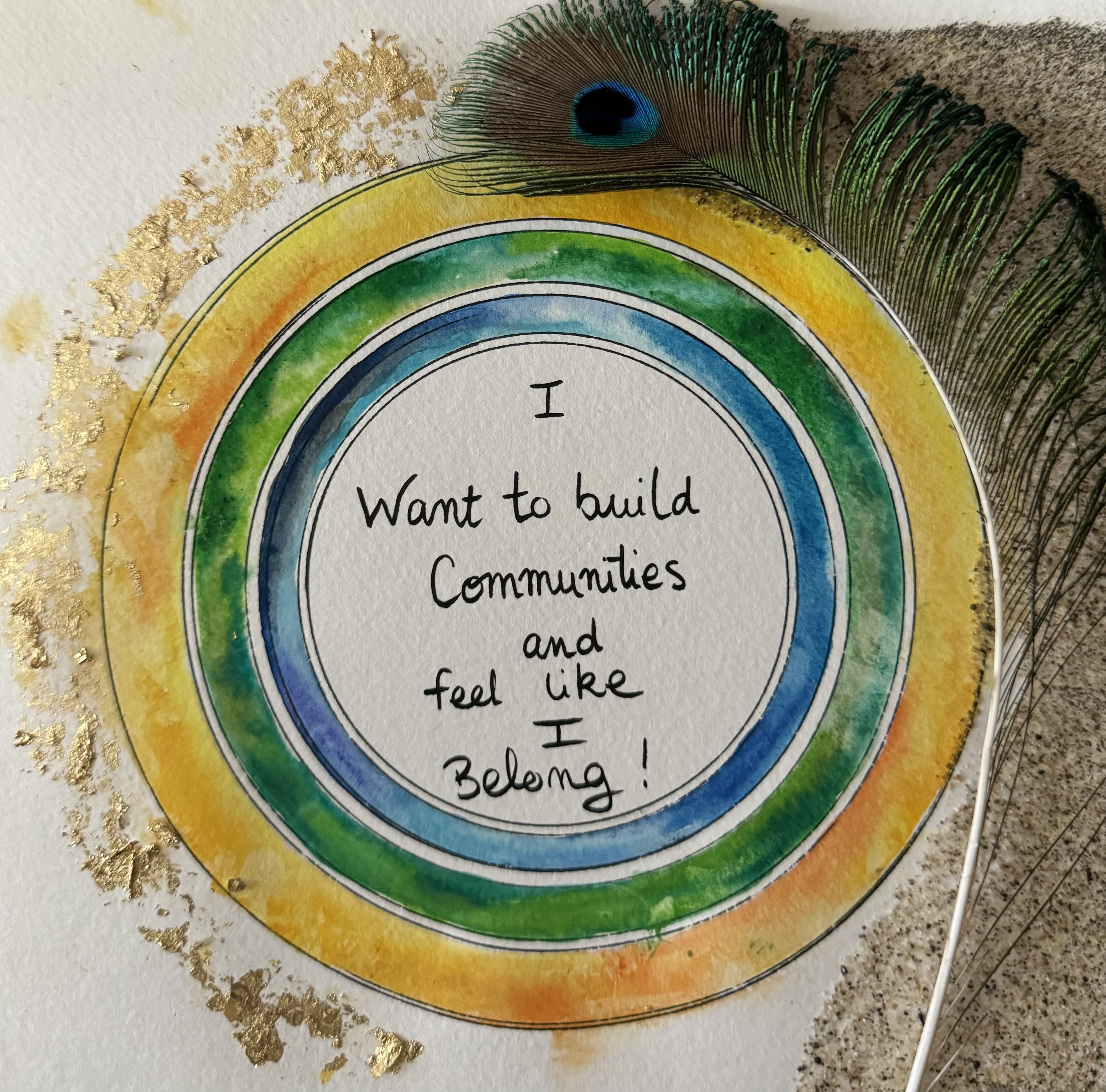
High Holiday Totem Affirmation | Blessing for the Home
Preview
More
If you can find stillness,
the jasmine will night-bloom in your direction
and the breeze
will carry its sacred exhalation of perfume
toward you.
Breathe,
the moon will cascade waves of radiance
downward,
drop her silver robes,
glow.
You will awaken,
overtaken by a love
that asks no permission,
golden particles rising
beneath your skin.
all of existence
longs to be an offering.
eternity is a constant whisper
wishing to be listened to.
This is the beginning.
This is only the beginning.
Let it in.
The Beginning by Rachel Kann
Preview
More
"Blessed are we and the beauty of beginnings"
[smack your thighs with your hands -- waking up your body, accompanied by vocal sounds "oooooOOOOO OOOOooooo" going up and down]
"We come with humility and new ideas with the promise of green bananas*"
*Japanese cultural reference to having time for something to ripen
Blessing by the 2024 Radical Rituals cohort
A Blessing for Beginnings by the Radical Ritual Cohort
Preview
More
showing
1-6
of
425
Page
1
of
71