Mix-and-match
Explore content in our extensive library and pull it together into your own Jewish ritual booklet that honors and recognizes whatever life has brought your way.
Share a ritual
Add your own original content as a clip to our extensive library - a poem, blessing, or something else entirely. Someone out there is looking for exactly what only you can create.
Support us
with your donation.
Help us build moments of meaning and connection through home-based Jewish rituals.
Mix-and-match
Explore content in our extensive library and pull it together into your own Jewish ritual booklet that honors and recognizes whatever life has brought your way.
Share a ritual
Add your own original content as a clip to our extensive library - a poem, blessing, or something else entirely. Someone out there is looking for exactly what only you can create.
Support us
with your donation.
Help us build moments of meaning and connection through home-based Jewish rituals.
Featured clips
At the rising sun and at its going down; We remember them.
At the blowing of the wind and in the chill of winter; We remember them.
At the opening of the buds and in the rebirth of spring; We remember them.
At the blueness of the skies and in the warmth of summer; We remember them.
At the rustling of the leaves and in the beauty of the autumn; We remember them.
At the beginning of the year and when it ends; We remember them.
As long as we live, they too will live, for they are now a part of us as We remember them.
When we are weary and in need of strength; We remember them.
When we are lost and sick at heart; We remember them.
When we have decisions that are difficult to make; We remember them.
When we have joy we crave to share; We remember them.
When we have achievements that are based on theirs; We remember them.
For as long as we live, they too will live, for they are now a part of us as, We remember them.
We Remember Them by Sylvan Kamens & Rabbi Jack Riemer
Preview
More
In the Time of our Sorrow
By Rachel Kann
My tongue wants to un-gate the flood, it is
an urgent compulsion to spill knotted guts,
in these weeks of banned melody,
my lips wants to rebel,
to howl,
to sing
of my suffering,
of all my shortcomings,
every rejection,
every threat to our collective existence,
the abandonment unabated,
of how my heart is a bitter almond,
spilling with cyanide,
splitting its endocarp,
longing only for the orchard,
of how my heart is a heavy stone,
flack-jacketed,
sallow and sinking in my chest,
how a glut of shrapnel is stuck in my throat,
of how I am blindfolded in love’s minefield,
frozen, unable to navigate the danger
lurking beneath the surface,
hurtful blossoms
lying in night-wait
only to explode,
detonate the light of day,
of the world’s unending
re-dedication to the re-destruction
of temples.
My heart wants to take flight,
transcend the gravity
of this misbegotten planet.
Before the unkindness of ravens and
murder of crows can escape the open moan,
I am circle-dancing,
hand in hand with so many wondrous
warrior women,
with Magda and Miriam,
who came through the dark tunnel of the Shoah,
who are here with me,
present and spilling light.
This is beyond awe,
beyond gratitude.
We weave a grapevine
up the trunk of the almond tree,
we are strengthened by our suffering.
We are indestructible.
This world crushes us,
we refuse to turn poisonous,
dancing and rooting and branching
despite this.
In glorious defiance,
we pour ourselves forward
in honeyed amaretto flooding,
we sweeten the darkness,
light the bitterness.
We kasher every unholy implement
used against us.
We ready them for service
in the holy temple of our most
miraculous dance:
our continued existence.
As we enter a New Year without our loved one, our memories of them and the experiences we shared with them may begin to feel further away. This activity invites us into presence with our memories and creates a physical keepsake we can revisit. You may want to begin collecting memories during Rosh Hashanah, and continue adding to the jar throughout the year.
To start, place a large jar, decorated box or vessel in a convenient location. Next, whenever you have a memory of your loved one, write it down on a slip of paper and place it in the jar. If a memory crosses your mind and you don’t have access to paper, record a voice memo or type it into your phone so you can transfer it to paper later. Your memories can be simple, such as a holiday tradition, your loved one’s favorite food, or of an adventure or experience you shared.
Any time you wish to recall their lives, take a note from the jar. You can also revisit memories at the start of another New Year, when you say Yizkor or Kaddish, each time you visit their grave, or mark their birthday or yahrzeit. You can create a scrapbook with photos that correspond to the memories. You can read the notes together with other family members or friends and then share the story of the memory together. Or, invite several people to share stories at your Rosh Hashanah seder, Yom Kippur break fast or Sukkot gathering.
—
This ritual was adapted by Chloe Nassau, based on a creation from the Center for Loss & Renewal, Rabbi Benyamin Cirlin, LCSW
Sukkot is a joyous seven-day festival often connected to being thankful for the fall harvest. It takes place on the 15th Hebrew month of Tishrei. Sukkot also commemorates the 40 years of Jewish wandering in the desert after the giving of the Torah in Mt. Sinai. It is a rejoicing and the only festival in which we are commanded to do just that: rejoice. Sukkot, the plural of sukkah, translates to “huts” or “booths.” Sukkot are temporary dwellings we erect that have open walls and open doors. During this time, we invite friends and new friends to eat, rest, and rejoice.
Uzhpizin is Aramaic for “guests,” a reference to the founding figures of the Jewish people who are symbolically invited into the sukkah, along with their divine attributes (a wink at the Sefirot of Kabbalah). For 7 days, a set of biblical figures is invited, and their divine attributes are commemorated.
And.
Día de los Muertos (Day of the Dead) is a Latin festival celebrating and remembering loved ones no longer with us. The festival is a two-day celebration from November 1 to 2, sometimes around the same time as Sukkot. It is believed that on Día de los Muertos, the bridge between the natural and spiritual worlds opens so our deceased loved ones can return and visit us. While the festival is usually associated with Mexico, it is celebrated in different Latin countries in various ways. Families commonly gather in cemeteries at night, light candles, and place flowers on the burial sites of their loved ones. One would think this time to be one of sadness. Yet, it is a time when families sing, laugh, dance, eat, and celebrate their ancestors.
A big part of preparing for Día de los Muertos is the creation of temporary ofrendas (altars) in the home. Stemming from the Aztec practice of leaving food and water for the deceased to help them on their journey to the land of the dead, Latin families decorate ofrendas with flowers (often marigolds in Mexico), pictures of deceased loved ones, souvenirs, and loved one’s favorite foods. The belief is that the offerings help invite the deceased ancestor from the land of the dead; it is a call that gets louder the more one is remembered.
You can find a more detailed explanation of Sukkot and Día de los Muertos on Jewtina y Co.’s Jewish Holiday Resources page and Cultural Ritual Page, which served as a primary reference point for this ritual.
I am a Salvadoran Jew and, for years, have been exploring how I can observe Día de los Muertos in a way that honors my Jewish life. During a leadership retreat at Urban Adamah, a peer shared with me the Indigenous belief that when we heal, we heal the 7 generations that preceded us and the 7 generations that will follow us, likely derived from Lakota tribe beliefs. My journey as a Latin Jewish leader in Los Angeles took me to reconnect with my family line and heal the many scars of colonialism, war, racism, misogyny, and immigration. My ritual aims to honor that process by honoring my ancestors during a time when I am commanded to rejoice.
Step 1: In the days leading up to Sukkot, reflect on 7 ancestors or deceased loved ones you wish to honor. Will you honor them chronologically based on where they are in your family line? Will you honor them based on the divine attributes and how they embody that trait? Will you honor them next to specific founding Jewish figures? This is your practice and your ritual; lean on what feels authentic.
Step 2: Create an ofrenda! You can refer to this Recustom Altar Making Guide or Jewtina y Co.’s Día de los Muertos guide.
An ofrenda generally includes:
Step 3: Make your ofrenda sacred with a blessing. I use the blessing during Havdalah that marks the separation of the holiness of Shabbat from the ordinariness of the rest of the week.
Baruch atah Adonai, hamavdil bayn kodesh lechol.
Blessed are You God, who separates between the holy and the ordinary.
Step 4: It’s Sukkot! Use the chart below to structure each day for the Ushpizin ceremony. You can refer to this booklet by 18Door for a brief review of Sukkot. If you’re building a sukkah, consider the symbolism of building it around your ofrenda. If you cannot build a sukkah, consider the power of your ofrenda and how your ancestors/deceased loved ones are connected to you, with or without a temporary dwelling.
Day
Ancestor or
Deceased Loved One
Divine Attributes
Founding Jewish Figures
1
Chesed, loving kindness
Abraham & Sarah
2
Gevurah, strength
Issac & Rebecca
3
Tiferet, splendor
Jacob & Leah
4
Netzah, eternity
Joseph & Rachel
5
Hod, glory
Moses & Miriam
6
Yesod, foundation
Aaron & Deborah
7
Malkhut, royalty
David & Ruth
Step 5: Ushpizin. Before the meal, we invite these special guests to join us in the sukkah. Although all the names are mentioned each evening, we make a special call to a special guest each night. If that is your practice, you can refer to this excerpt by the Rabbinical Assembly, which has the Ushpizin blessings in English and Hebrew.
Step 6: Take a moment to reflect on the invitation. Speak about the ancestor or deceased loved one you are remembering. Refer to your ofrenda and share a story, idea, or question about them. Reflect on the divine attribute of that day. How did this person embody that? Think about the founding Jewish figure being honored; what traits do they possess similar to the person you remember?
Step 7: Eat! Rejoice! Your sukkah or home is full of so much love and respect. Acknowledge the power you possess by honoring your ancestors or loved ones. You are the link between them and your future generations. They’re with you, always.
My Practice
Below is what my ritual looks like.
Ofrenda:
Ancestors & Deceased Loved Ones (Z”L):
Day
Ancestor or Deceased Loved One
Divine Attributes
Founding Jewish Figures
1
Jaime Salvador Carrillo Torres (Father)
Chesed, loving kindness
Abraham & Sarah
2
José Luis García de León y García (Maternal Grandfather, Mexican Army Veteran)
Gevurah, strength
Issac & Rebecca
3
Afredo Carrillo (Paternal Grandfather, WWII U.S. Army Veteran)
Tiferet, splendor
Jacob & Leah
4
SPC Kaleb Loyer & SPC Matthew Hester (Soldiers I served with in the U.S. Army)
Netzah, eternity
Joseph & Rachel
5
Francisco García de León Hidalgo y Costilla (Great Paternal Grandfather, he fought alongside Pancho Villa in the Mexican Revolution)
Hod, glory
Moses & Miriam
6
The women in my family line who did not have agency or a voice during their time
Yesod, foundation
Aaron & Deborah
7
Miguel Hidalgo y Costilla (Ancestor, Father of the Mexican War of Independence)
Malkhut, royalty
David & Ruth
Ritual by Luis Rene Carillo
Ushpizin | Los Siete Invitados: Sukkot and Día de los Muertos
Preview
More
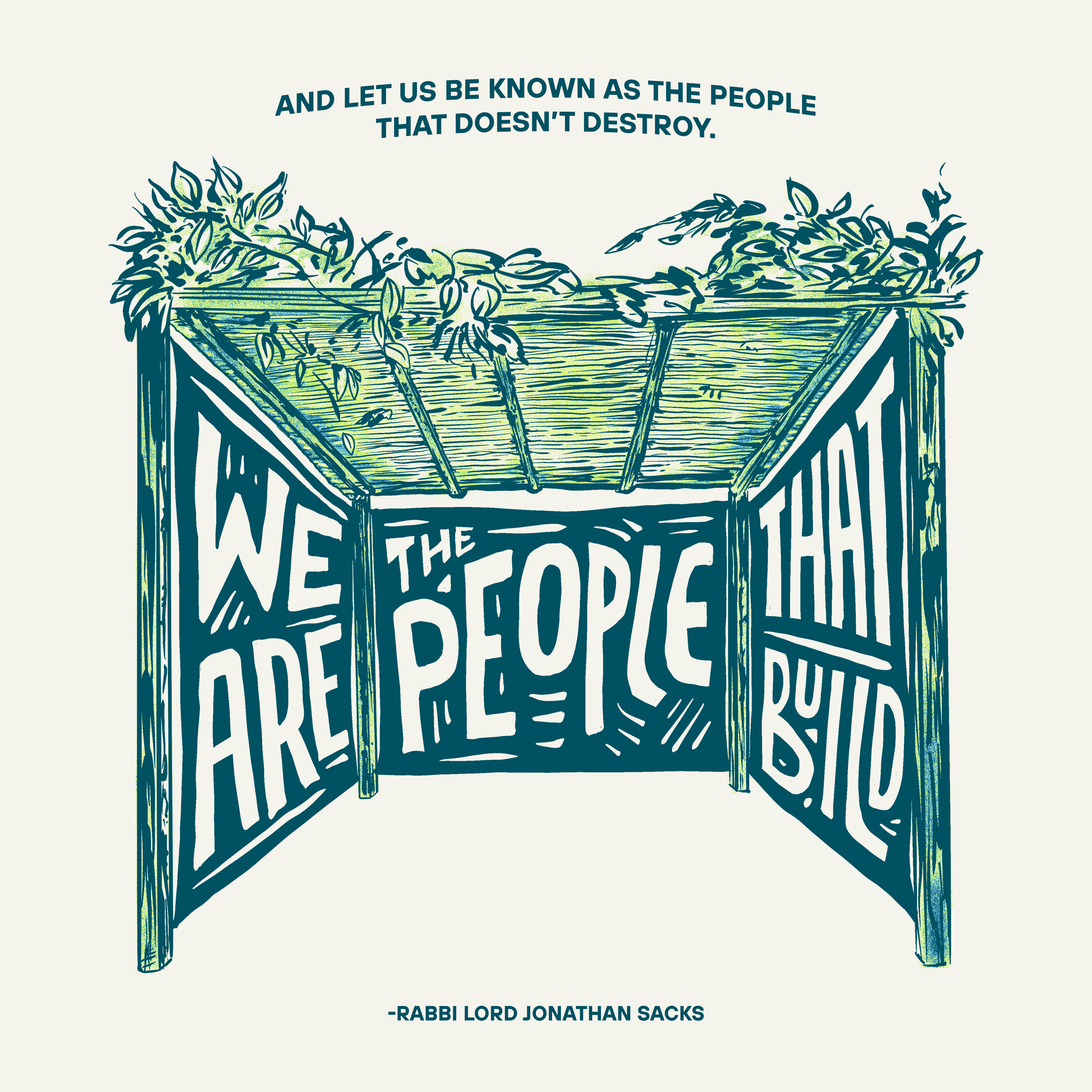
We Are the People Who Build
Preview
More
showing
1-6
of
419
Page
1
of
70