Mix-and-match
Explore content in our extensive library and pull it together into your own Jewish ritual booklet that honors and recognizes whatever life has brought your way.
Share a ritual
Add your own original content as a clip to our extensive library - a poem, blessing, or something else entirely. Someone out there is looking for exactly what only you can create.
Support us
with your donation.
Help us build moments of meaning and connection through home-based Jewish rituals.
Mix-and-match
Explore content in our extensive library and pull it together into your own Jewish ritual booklet that honors and recognizes whatever life has brought your way.
Share a ritual
Add your own original content as a clip to our extensive library - a poem, blessing, or something else entirely. Someone out there is looking for exactly what only you can create.
Support us
with your donation.
Help us build moments of meaning and connection through home-based Jewish rituals.
Featured clips
Before you check your phone. Before your feet hit the floor. Before the day gets loud — Jewish tradition asks you to say two words: thank you.
Modeh Ani is the first prayer of the Jewish day, said the moment your eyes open, while still in bed. It is two lines long. It requires nothing but your breath and your willingness.
מוֹדֶה אֲנִי לְפָנֶיך מֶלֶך חַי וְקַיָם שֶׁהֶחֱזַרְתָּ בִי נִשְׁמָתִי בְחֶמְלָה, רַבָּה אֱמוּנָתֶךָ
Modeh ani l’fanecha, melech chai v’kayam,
shehechezarta bi nishmati b’chemla, raba emunatecha.
I give thanks before You, living and eternal Sovereign,
for You have returned my soul to me with compassion.
How great is Your faithfulness in me.
The word modeh doesn’t just mean “thank.” It can also mean “admit” or “surrender” — an acknowledgment that we are not entirely self-made, that each day is not owed to us but given. And there’s something hidden in the word order: it would be grammatically correct to say Ani modeh — “I thank You.” But it’s reversed: Modeh Ani — thank you comes before I. The prayer reminds us, right at the start, to lead with gratitude rather than self.
The Practice
Tomorrow morning, before anything else, say the words above — or simply say: I am grateful to be here. This day is a gift. That’s it. Do it again the next morning. And the next.
If the language of “Sovereign” or “King” (melech) doesn’t fit you, swap in Ruach (Spirit), or Source, or simply speak to whatever you do believe in. The vessel matters less than the turning toward gratitude.
Three Things
Each morning after reciting Modeh Ani — or in its place — write down three things you are grateful for. They can be tiny. The coffee. The quiet. The text from a friend. Over time, this simple practice rewires the brain’s tendency to scan for threat first, and trains the eye toward the good that is already here.
Share with a friend or chevruta: What is one thing you noticed this morning — something small — that you are genuinely glad exists? What would shift in your day if the very first word you said every morning was thank you?
*Modeh = masculine, Modah = feminine
Modeh/Modah Ani*: A Morning Practice
Preview
More
You are Jewish enough. You have always been Jewish enough.
Whatever you remember and whatever you've forgotten.
Whatever you observe and whatever you've let go.
Whatever you believe on your most searching days and whatever you question on your most doubtful ones.
You are not a bad Jew.
You are a Jew in process — which is the only kind there has ever been.
The rabbis argued. The prophets wrestled. The mystics wandered.
Abraham left without knowing where he was going.
Moses said he couldn't speak.
Ruth chose a people that wasn't yet hers.
And still, they showed up.
So can you.
May you enter these pages without apology.
May you bring your whole self — your questions, your gaps, your longing, your love.
May you find here not a test to pass, but a table to sit at.
And may the learning you do, in whatever form it takes,
be a blessing to you and to everyone whose life touches yours.
Baruch atah — you are blessed. Go ahead.
A Blessing for the Journey
Preview
More
Before we begin, consider journaling as you reflect on these questions. There are no right answers. Write what's true for you.
1. What is a ritual — Jewish or otherwise — that has brought you genuine joy? It doesn't have to be formal or religious. It might be a Friday night dinner, a song you always sing, a food that means home. What made it meaningful? Who was there?
2. Think about your Jewish journey so far. What moments, practices, or people have felt most alive to you — the times you felt most connected to something larger than yourself? And where have there been gaps, distances, or questions you haven't known how to ask?
3. Have you ever held back from a Jewish experience because you felt you didn't know enough, or didn't belong quite enough? What would it mean to give yourself permission to show up anyway — curious, imperfect, and enough exactly as you are?
4. What do you most want to feel more of in your life right now — joy, connection, meaning, purpose, or something else entirely? How might ritual — even a small, simple one — be a doorway toward that?
5. What are you passing on? To your children, grandchildren, friends, or community — what Jewish memories, values, or practices do you hope will outlast you? And is there anything you wish someone had passed on to you?
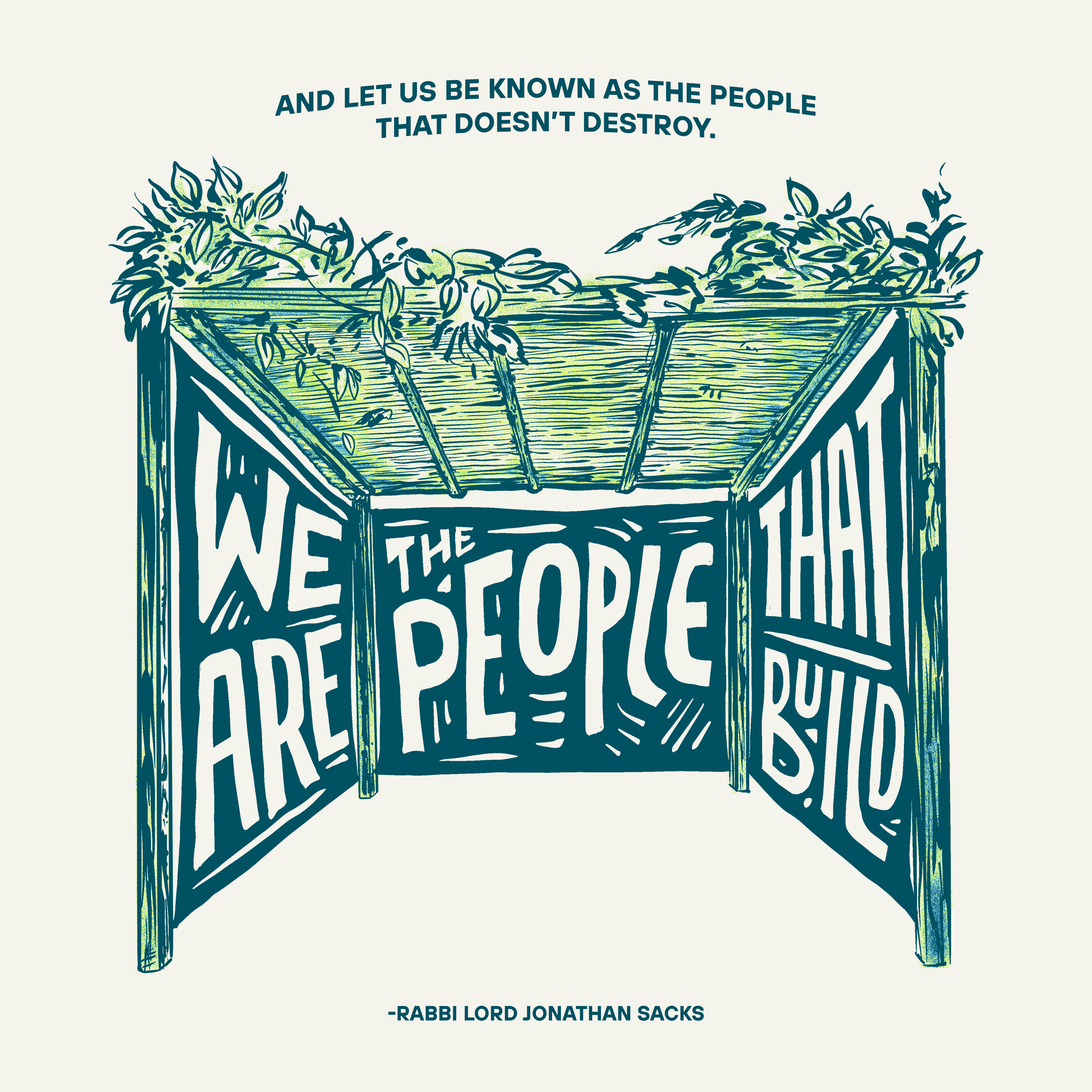
We Are the People Who Build
Preview
More
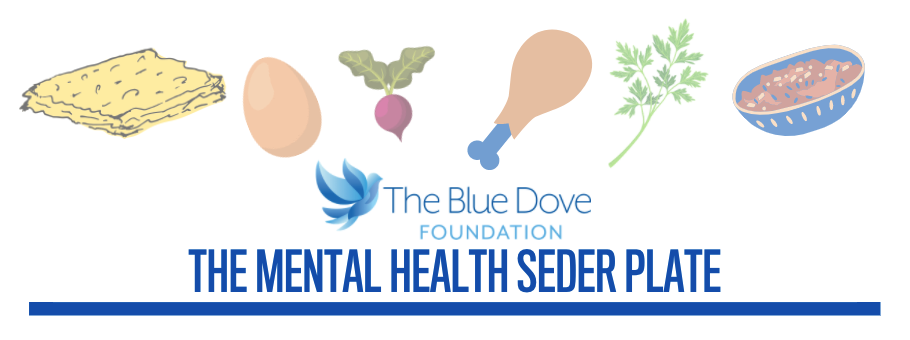
Mental Health Interpretations of the Seder Plate
Preview
More
As we begin retelling the story of our redemption, we take the three pieces of matzah before us, remove the center piece, and split it in half. We eat the first half at the beginning of the Seder and hide the other half, which serves as the afikoman we eat at the conclusion of the Seder. It is worth noting the bread of slavery consumed at the beginning of the Seder and the bread of freedom we eat at the end of the Seder both come from the same piece of matzah.
Sometimes the difference between the things that cause us pain and those that give us pleasure is simply a matter of perspective. When seen through the lens of miraculous redemption and a recognition of the larger picture of our path to freedom, the bread of slavery transforms into the bread of freedom it was always intended to become. We must also remember — or hope — the potential for recovery isinside of us, waiting to be recognized or — like the afikomen — found.
Prompt: What experience in your own life caused you pain but, in hindsight, can be seen as a blessing? Or, if you currently find yourself in the midst of a painful experience, can you try to identify one positive aspect or lesson you can learn from it?
From the Mental Health Passover Seder Companion by The Blue Dove Foundation
showing
1-6
of
68815
Page
1
of
11470