Mix-and-match
Explore content in our extensive library and pull it together into your own Jewish ritual booklet that honors and recognizes whatever life has brought your way.
Share a ritual
Add your own original content as a clip to our extensive library - a poem, blessing, or something else entirely. Someone out there is looking for exactly what only you can create.
Support us
with your donation.
Help us build moments of meaning and connection through home-based Jewish rituals.
Mix-and-match
Explore content in our extensive library and pull it together into your own Jewish ritual booklet that honors and recognizes whatever life has brought your way.
Share a ritual
Add your own original content as a clip to our extensive library - a poem, blessing, or something else entirely. Someone out there is looking for exactly what only you can create.
Support us
with your donation.
Help us build moments of meaning and connection through home-based Jewish rituals.
Featured clips
At the rising sun and at its going down; We remember them.
At the blowing of the wind and in the chill of winter; We remember them.
At the opening of the buds and in the rebirth of spring; We remember them.
At the blueness of the skies and in the warmth of summer; We remember them.
At the rustling of the leaves and in the beauty of the autumn; We remember them.
At the beginning of the year and when it ends; We remember them.
As long as we live, they too will live, for they are now a part of us as We remember them.
When we are weary and in need of strength; We remember them.
When we are lost and sick at heart; We remember them.
When we have decisions that are difficult to make; We remember them.
When we have joy we crave to share; We remember them.
When we have achievements that are based on theirs; We remember them.
For as long as we live, they too will live, for they are now a part of us as, We remember them.
We Remember Them by Sylvan Kamens & Rabbi Jack Riemer
Preview
More
Background:
This ritual reimagines the traditional practice of tashlich, a ritual that symbolizes casting away the ways we have “missed the mark” in the past year. Using the language of “missing the mark” is a way of acknowledging past mistakes without the punitive connotation conjured by words like “sinning.” The idea of missing the mark also suggests opportunity for improvement and progress, a chance to get closer to our ideal selves. The following ritual plays on this concept with the practice of drawing a target as a metaphor of “making the mark.” It is meant to be practiced at the beach on the first day of Rosh Hashanah, but some find it meaningful to do it during the ten Days of Awe between Rosh Hashanah and Yom Kippur, the Yamim Nora’im, or even until the last day of Sukkot, expect on Shabbat.
Beginning:
Arrive at the beach and find a moment to ground yourself. This can be by taking a dip in the water, sitting in the sand and taking a few deep breaths, or any other way you like to be present in body and mind. Find a stick or other tool for drawing in the sand and draw three large concentric circles. Find three small objects. Think rocks, seashells, or pebbles. You may also choose to use a small token or object that represents your cultural background.
The three circles represent community/the world, the middle represents people who are close to you, the smallest one represents yourself.
Stand or sit in the outer circle and take a minute to think about how you “missed the mark” with each of the groups and how you can improve/contribute more in the coming year. Place a stone or object of choice in each circle as you move through the activity. You can think about specific actions you are not proud of, or take a more general approach guided by the following questions:
As you move from outer to inner circle and contemplate the answers, ground your feet or legs in the sand. Feel the ground and the warmth of the sun supporting you.
Middle:
Next, take a small bag of bread crumbs, representing things you have done in the past year that you have not been proud of. Here is another opportunity to use something that represents your unique background. For example, instead of bread crumbs, you can use salt or another spice– anything that can be easily dispersed in water. Thank G-d or a higher power for giving you another chance to improve in the coming year.
If you want, you can use the traditional tashlich prayer, or any alternative that resonates with you.
Here is one option:
Holy One of Blessing
Here I am again
ready to let go of my mistakes.
Help me to release myself
from all the ways I've missed the mark.
Help me to stop carrying
the baggage of my poor choices.
As I cast this bread upon the waters
lift my troubles off my shoulders.
Help me to know that last year is over,
washed away like crumbs in the current.
Open my heart to blessing and gratitude.
Renew my soul as the dew renews the grasses.
Amen.
-Rabbi Judith Beiner
End:
Return to your circle. Collect the three objects and return to the outer, largest circle. You will repeat the opening exercise, but instead of asking yourself how you can do better, ask:
The goal is to bring the energy of all the good you have done into the new year. You can end the practice by placing your hand on your heart, closing your eyes, and visualizing yourself starting the new year in joy and peace, committed to spreading this very joy and peace to others.
Alternative practices: If you don’t have access to a beach, you can do this ritual at home with a sand tray and a bath tub, or at a park! Sand art kits work great too!
Note: To make this practice extra special, you can wear something new for the ritual, such as a new bathing suit/sun hat. This can also be done as a shared experience with a friend or family member. Make the ritual your own by adding or modifying to meet your unique needs!
Feliz Año Nuevo and Shanah Tovah!
Ritual by Elianna Bernstein
Making the Mark by Elliana Bernstein
Preview
More
As Jews in diaspora, we can struggle to find a connection to our homeland. But just like a tortoise in the desert, we take our home with us.
INSPIRATION
The inspiration for this practice comes from my intersectional roots as both Japanese and Jewish. My Japanese mother had a practice where we weren’t allowed to wear new shoes outside of the house without putting ashes on the soles. The ashes were from incense burned to honor our ancestors. As we walked out into the world, we brought our ancestors with us, and were indelibly connected to them.
INTENTION
This is a ritual for CONNECTION and RETURN to one’s roots, as well as a reminder that as much as it is there to protect us, we also have an obligation to be STEWARDS to our homeland - including and especially while in diaspora.
TIME FRAME
This ritual BEGINS at the start of Rosh Hashanah and ENDS at the conclusion of Yom Kippur.
THE RITUAL
TEXT IN RED should be said by the lead practitioner who is sharing this ritual with others, or if sole practitioner, said to themselves.
TEXT IN BLUE should be said by all, in unison.
BEGINNINGS
1)
*** This is your soil, brought forth by you, representing where you are today as your practice begins, and where your practice has led you. I
f you are returning, bring forth your soil which you have safeguarded on your journeys.***
2)
In the entranceway to your home, spill out your soil to create approximately one square foot of space, in any shape or form.
*** This is your soil in your home. It is yours to celebrate and connect with.***
3)
Write ISRAEL in the soil in your native language.
*** This square foot of earth IS your piece of Israel. It is your homeland. Your connection to it is ABSOLUTE through the fact of being Jewish. Your physical presence in diaspora, appearance or racial presentation, or blood quantum have no bearing on your legitimacy as a Jew with a connection to the land of Israel. Being Jewish is enough. YOU are enough.***
In your mother language, honoring the land, we say in unison:
“This is my land. This is my home. This is my Israel.”
EN/DURING
1)
Prepare with spiritual vigilance.
***At the end of each day, you will find your home soil WILL have been disturbed. Do not be shocked or surprised. Without vigilance, the forces of entropy will lay siege upon your earth. Wind may disturb it. An accidental footstep may disturb it. Those who are offended by the concept or word ISRAEL may intentionally attempt to erase ISRAEL from your soil, your home, and your heart. This is to be expected.***
2)
Restore.
***We will rebuild.***
At sunset each night, reinforce the edges where your earth has been disturbed. Retrace and rewrite the name of ISRAEL. Renew and replenish the earth as needed. You are the guardian and steward of this one square foot of ISRAEL. It is your responsibility to safeguard this small piece of soil that connects you to your homeland.
***We do not pretend to be surprised that there are those that would erase the name of Israel from the earth. But we do not shy away from our obligation to rebuild and restore it.***
Upon restoration, we say in unison:
“This is my land. This is my home. This is my Israel.”
RESOLUTION
1)
On the final night, at the end of Yom Kippur, you will reinforce your square foot of land, retrace the name of ISRAEL, and say in unison:
“This is my land. This is my home. This is my Israel.”
2)
***Safeguard this land and take ISRAEL with you.***
Upon restoration, gather the soil in your hands and pour it into a container to safeguard until the next Rosh Hashanah.
***Your soil can also be shared with others to bring with them through diaspora. Children can seed their containers from the soil of the parents. Newcomers to the practice can start their tradition through connection with your earth. Go forth as stewards, with ISRAEL in your heart.***
Ritual by Stephen Nolly
The Diaspora Tortoise by Stephen Nolly
Preview
More
As we enter a New Year without our loved one, our memories of them and the experiences we shared with them may begin to feel further away. This activity invites us into presence with our memories and creates a physical keepsake we can revisit. You may want to begin collecting memories during Rosh Hashanah, and continue adding to the jar throughout the year.
To start, place a large jar, decorated box or vessel in a convenient location. Next, whenever you have a memory of your loved one, write it down on a slip of paper and place it in the jar. If a memory crosses your mind and you don’t have access to paper, record a voice memo or type it into your phone so you can transfer it to paper later. Your memories can be simple, such as a holiday tradition, your loved one’s favorite food, or of an adventure or experience you shared.
Any time you wish to recall their lives, take a note from the jar. You can also revisit memories at the start of another New Year, when you say Yizkor or Kaddish, each time you visit their grave, or mark their birthday or yahrzeit. You can create a scrapbook with photos that correspond to the memories. You can read the notes together with other family members or friends and then share the story of the memory together. Or, invite several people to share stories at your Rosh Hashanah seder, Yom Kippur break fast or Sukkot gathering.
—
This ritual was adapted by Chloe Nassau, based on a creation from the Center for Loss & Renewal, Rabbi Benyamin Cirlin, LCSW
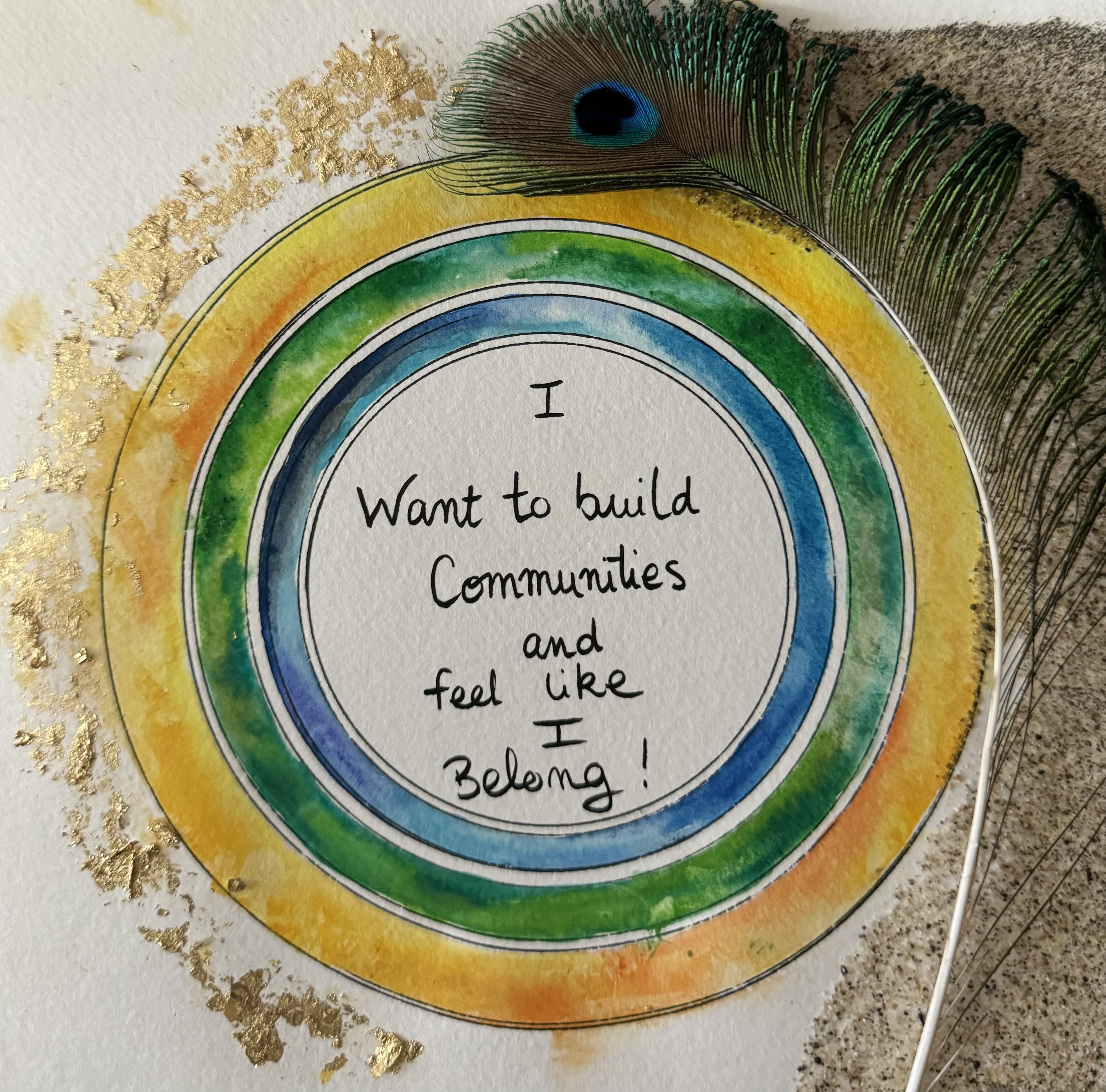
High Holiday Totem Affirmation | Blessing for the Home
Preview
More
In the Time of our Sorrow
By Rachel Kann
My tongue wants to un-gate the flood, it is
an urgent compulsion to spill knotted guts,
in these weeks of banned melody,
my lips wants to rebel,
to howl,
to sing
of my suffering,
of all my shortcomings,
every rejection,
every threat to our collective existence,
the abandonment unabated,
of how my heart is a bitter almond,
spilling with cyanide,
splitting its endocarp,
longing only for the orchard,
of how my heart is a heavy stone,
flack-jacketed,
sallow and sinking in my chest,
how a glut of shrapnel is stuck in my throat,
of how I am blindfolded in love’s minefield,
frozen, unable to navigate the danger
lurking beneath the surface,
hurtful blossoms
lying in night-wait
only to explode,
detonate the light of day,
of the world’s unending
re-dedication to the re-destruction
of temples.
My heart wants to take flight,
transcend the gravity
of this misbegotten planet.
Before the unkindness of ravens and
murder of crows can escape the open moan,
I am circle-dancing,
hand in hand with so many wondrous
warrior women,
with Magda and Miriam,
who came through the dark tunnel of the Shoah,
who are here with me,
present and spilling light.
This is beyond awe,
beyond gratitude.
We weave a grapevine
up the trunk of the almond tree,
we are strengthened by our suffering.
We are indestructible.
This world crushes us,
we refuse to turn poisonous,
dancing and rooting and branching
despite this.
In glorious defiance,
we pour ourselves forward
in honeyed amaretto flooding,
we sweeten the darkness,
light the bitterness.
We kasher every unholy implement
used against us.
We ready them for service
in the holy temple of our most
miraculous dance:
our continued existence.
showing
1-6
of
335
Page
1
of
56