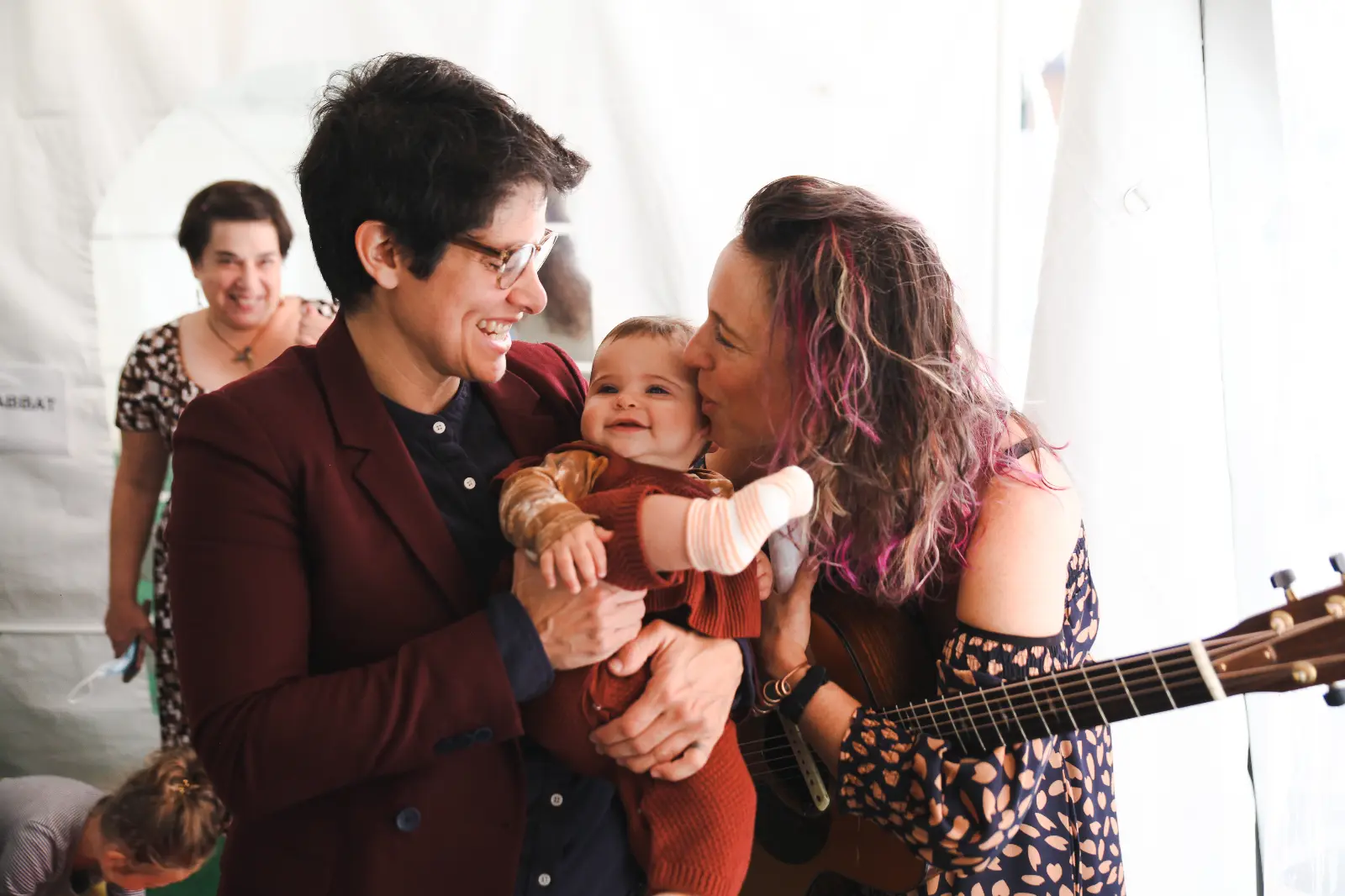
From joy to grief, beauty to struggle, the journey into parenthood is full of uncertainty. Whether you’re trying to conceive, navigating a loss, or welcoming an adopted child into your home–we’re here to support you on your journey to parenthood, however that may look.
Mix-and-match
Explore content in our extensive library and pull it together into your own Jewish ritual booklet that honors and recognizes whatever life has brought your way.
Share a ritual
Add your own original content as a clip to our extensive library - a poem, blessing, or something else entirely. Someone out there is looking for exactly what only you can create.
Support us
with your donation.
Help us build moments of meaning and connection through home-based Jewish rituals.
Birkhat haGomel (Blessing of Gratitude) is commonly said after recovering from serious illness or delivering a baby, but can also be recited in appreciation for completing a dangerous journey. It's usually recited in a group of at least 10 other adults who can offer the response.
First, one person offers this blessing:
Baruch ata Adonai, Eloheinu melech ha-olam, ha-gomel l’chayavim tovot she-g’malani kol tov.
Blessed are You, Lord our God, ruler of the world, who rewards the undeserving with goodness, and who has rewarded me with goodness.
After the recitation of this blessing, the community responds:
Mi she-g’malcha kol tov, hu yi-g’malcha kol tov selah.
May he who rewarded you with all goodness reward you with all goodness for ever.
We Remember Them
by Sylvan Kamens & Rabbi Jack Riemer
At the rising sun and at its going down; We remember them.
At the blowing of the wind and in the chill of winter; We remember them.
At the opening of the buds and in the rebirth of spring; We remember them.
At the blueness of the skies and in the warmth of summer; We remember them.
At the rustling of the leaves and in the beauty of the autumn; We remember them.
At the beginning of the year and when it ends; We remember them.
As long as we live, they too will live, for they are now a part of us as We remember them.
When we are weary and in need of strength; We remember them.
When we are lost and sick at heart; We remember them.
When we have decisions that are difficult to make; We remember them.
When we have joy we crave to share; We remember them.
When we have achievements that are based on theirs; We remember them.
For as long as we live, they too will live, for they are now a part of us as, We remember them.
By Shannon Sarna for The Nosher
Ingredients
4 lbs sweet potatoes
2 lb Russet potatoes
1 lb pitted prunes
1 lb baby carrots, or whole carrots cut into 1 inch pieces
3 lbs flanken
3/4 cup brown sugar
1/2 cup fresh lemon juice
Directions:
Said after childbirth, major surgery, surviving an accident, traveling overseas, being released from incarceration and other life-threatening situations, the Gomel Blessing has its origins in the Talmud. The blessing is said together with community.
First, the person who has survived says:
בָּרוּךְ אַתָּה ה’ אֱלֹהֵינוּ מֶלֶךְ הָעוֹלָם הַגּוֹמֵל לְחַיָּבִים טוֹבוֹת שֶׁגְּמָלַנִי כָּל טוֹב
Barukh atah Adonai, Elohainu melekh haOlam, ha-gomel l’chayavim tovot she-g’malani kol tov.
Blessed are You, Lord our God, ruler of the world, who rewards the undeserving with goodness, and who has rewarded me with goodness.
Then, the community responds:
מִי שֶׁגְמַלְךָ כֹּל טוֹב הוּא יִגְמַלְךָ כֹּל טוֹב סֶלָה
May God who rewarded you with all goodness reward you with all goodness forever.
Mi she-g’malcha kol tov, hu yi-g’malcha kol tov selah.
We Remember Them by Sylvan Kamens & Rabbi Jack Riemer
At the rising sun and at its going down; We remember them.
At the blowing of the wind and in the chill of winter; We remember them.
At the opening of the buds and in the rebirth of spring; We remember them.
At the blueness of the skies and in the warmth of summer; We remember them.
At the rustling of the leaves and in the beauty of the autumn; We remember them.
At the beginning of the year and when it ends; We remember them.
As long as we live, they too will live, for they are now a part of us as We remember them.
When we are weary and in need of strength; We remember them.
When we are lost and sick at heart; We remember them.
When we have decisions that are difficult to make; We remember them.
When we have joy we crave to share; We remember them.
When we have achievements that are based on theirs; We remember them.
For as long as we live, they too will live, for they are now a part of us as, We remember them.
Said after childbirth, major surgery, surviving an accident, traveling overseas, being released from incarceration and other life-threatening situations, the Gomel Blessing has its origins in the Talmud. The blessing is said together with community.
First, the person who has survived says:
בָּרוּךְ אַתָּה ה’ אֱלֹהֵינוּ מֶלֶךְ הָעוֹלָם הַגּוֹמֵל לְחַיָּבִים טוֹבוֹת שֶׁגְּמָלַנִי כָּל טוֹב
Barukh atah Adonai, Elohainu melekh haOlam, ha-gomel l’chayavim tovot she-g’malani kol tov.
Blessed are You, Lord our God, ruler of the world, who rewards the undeserving with goodness, and who has rewarded me with goodness.
Then, the community responds:
מִי שֶׁגְמַלְךָ כֹּל טוֹב הוּא יִגְמַלְךָ כֹּל טוֹב סֶלָה
May God who rewarded you with all goodness reward you with all goodness forever.
Mi she-g’malcha kol tov, hu yi-g’malcha kol tov selah.
At the rising sun and at its going down; We remember them.
At the blowing of the wind and in the chill of winter; We remember them.
At the opening of the buds and in the rebirth of spring; We remember them.
At the blueness of the skies and in the warmth of summer; We remember them.
At the rustling of the leaves and in the beauty of the autumn; We remember them.
At the beginning of the year and when it ends; We remember them.
As long as we live, they too will live, for they are now a part of us as We remember them.
When we are weary and in need of strength; We remember them.
When we are lost and sick at heart; We remember them.
When we have decisions that are difficult to make; We remember them.
When we have joy we crave to share; We remember them.
When we have achievements that are based on theirs; We remember them.
For as long as we live, they too will live, for they are now a part of us as, We remember them.
-by by Sylvan Kamens & Rabbi Jack Riemer
Clip source: The Shomer Collective
This Passover ritual focuses on the four cups of wine and their expressions of freedom. Fertility journeys are often bereft of freedom, as the struggle to build your family, may leave you feeling stuck. This ritual invites you to explore what freedom feels like through reflection and the creation of a vision board. You will need 4 blank pieces of paper, tape or glue, scissors, pens or markers, and a few magazines. You may want to perform this ritual in a peaceful setting that is free from distractions, and you may want to have soothing music alongside you.
Take your four pieces of paper and write one of each of these expressions of freedom on the top of the page. You may choose to do this in whichever language you prefer. Design a vision board full of images that you may choose to cut out from the magazines, or that you may draw yourself. You can also write, paste objects on your vision board, or add to them in any way that speaks to you.
Here are the prompts for each board/piece of paper:
As you are creating these images you may want to put on some nourishing music and possibly even sip some grape juice or wine.
You may want to bring these four boards to a Passover Seder and place them on the table or hang them somewhere in the room. If you find that they offer you healing and inspiration, then please place them somewhere strategic and use them after Pesach as well. You may want to place them by your bed so you see them as you fall asleep and as you wake up. Maybe they live in your car and accompany you on your travels. Or perhaps you may want to hang them on your wall or place them where you place other family photos.
If you find yourself at a Passover Seder where you feel comfortable doing so, you may want to share one of these pages during each of the four cups of wine/grape juice.
This Passover ritual focuses on the part of the Seder known as the Afikoman. It invites you to rediscover a part of yourself that you may have been forced to ignore during your fertility journey. This ritual includes opportunities for reflection as well as creative expression. You will need a medium or large manilla envelope, pens, an index card or piece of paper, and markers. You may want to perform this ritual in a peaceful setting, and you may want to do so before the Seder so that you can use your creation at the Seder.
Think about which part of yourself you have “put in a bag” and allowed to lie dormant while you have been engrossed in your fertility journey. Write this element on your piece of paper or index card.
The manilla envelope is going to be your special afikomen bag. Please use the markers and pens to decorate in a way that reflects what you are thinking and feeling at this moment. You may want to use images or words. You may also want to have other people write notes to you or use quotes from the Torah or other texts that are meaningful to you. Feel free to put on music and do this in a relaxing and pleasant environment so you can dive into this step of the process.
Once you are done designing the envelope, place your paper/card inside. I invite you to bring this to the Passover Seder and put your Afikomen in the bag along with the paper/card. When it is time to eat the Afikomen and it is removed from the envelope, take out the paper/card as well. Read it to yourself and consider how you can work to bring this aspect of yourself back to life. What can you do to give this part of you that has been dormant an opportunity to be reinvigorated and rejuvenated? You may want to share this with the other people at the Seder, or it might be something that you keep to yourself.
If you will be at a second seder as well, write a second element of your nature that you have set aside, so that you can perform this ritual again.
May the afikomen remind you that you are so much more than your fertility struggles and that you do not need to learn how your story ends in order to engage and invigorate all the aspects of your nature.
This Passover ritual focuses on the moment during the Seder when we open the door to Elijah the Prophet and honor Miriam the Prophetess. Fertility journeys can be challenging and may leave you feeling depleted and defeated. This ritual offers you an opportunity for reflection that will ask you to consider what type of support would be most beneficial to you. You will need a big goblet, index cards, and a pen. You may want to perform this ritual in a peaceful setting that is free from distractions.
Place the goblet, index cards, and pen in front of you. Below are a series of questions. For each question please write at least two answers, but feel free to write as many as come to mind. Please place one answer on each card. After you write the cards, place them in a stack nearby.
Question 1: Often during a fertility journey, we are so consumed with and exhausted by the journey that other important tasks may fall by the wasteside (ex. Housework, food shopping, tasks for work, paying bills, etc.)
Question 2: During a fertility journey, whether you are public about your struggle or not, people in your life might not always say the right thing.
Question 3: During a fertility journey it is sometimes hard to recognize the gifts that we have and the inner strength that resides in our hearts. Consider which aspects of your personality have helped you overcome, endure, and triumph over other challenging life moments.
Question 4: During a fertility journey there are things that would make us feel supported and cared for (ex. A hug, or a bouquet of flowers, a thoughtful gift).
After you have written all of these cards, shuffle them and then flip them all over so they are facing downward. On the back of each card, write the name of someone you could ask to do the action that is written on the front of the card. You may write the same person on the back of multiple cards, but it is not ideal to have the same person for all of these tasks.
When you are done, place all of these cards into the goblet–your Elijah’s cup. Each day of Passover you may want to take a card from the goblet and ask the person whose name you associated with that task, to do that action for you. You can explain to them what you are doing and share with them why you chose them. You can also tell them that you would rather not explain, but you would really appreciate it if they would help you in this way.
It may feel very challenging to ask for help, but just like it is challenging for Elijah to go to every Passover seder in one night and yet he triumphs, so can you.
One of the central elements of the Seder is the mitzvah to retell the story of the Exodus from Egypt. There is something uniquely powerful about telling one’s story. It is a transformative experience for the storyteller and the listener alike.
However, the verse that communicates this mitzvah poses a challenge for people on a fertility journey. From Exodus 13:8
וְהִגַּדְתָּ֣ לְבִנְךָ֔ בַּיּ֥וֹם הַה֖וּא לֵאמֹ֑ר בַּעֲב֣וּר זֶ֗ה עָשָׂ֤ה ה֙ לִ֔י בְּצֵאתִ֖י מִמִּצְרָֽיִם׃
Ve’higaditah le’bincha bayom ha’hu leimor, baavour zeh asah Ad-nay li bi’tzeiti mi’mitzrayim
And you shall explain to your child on that day, ‘It is because of what the LORD did for me when I went free from Egypt
This verse places the commandment to tell the Passover story in the context of speaking to one’s child. But, what if one does not have a child? What if your own personal story of slavery is the one in which you try and try to have that child? What if you have not yet reached your own freedom or Promised Land, and therefore you cannot tell your Exodus story to your child?
You can reclaim this ritual of storytelling on Seder night and do so in a way that honors your fertility journey. Instead of telling your story to a child who has already been born, you may want to tell your story to your child that you are longing for and that you are trying so hard to bring into this world. You may want to tell that child that you dream of the story of how you searched for them and how you journeyed toward them. Although you may not know the end of the story yet, share what you feel right in this moment, about the journey you traversed in order to bring them into your life.
showing
1-12
of
49
Page
1
of
5