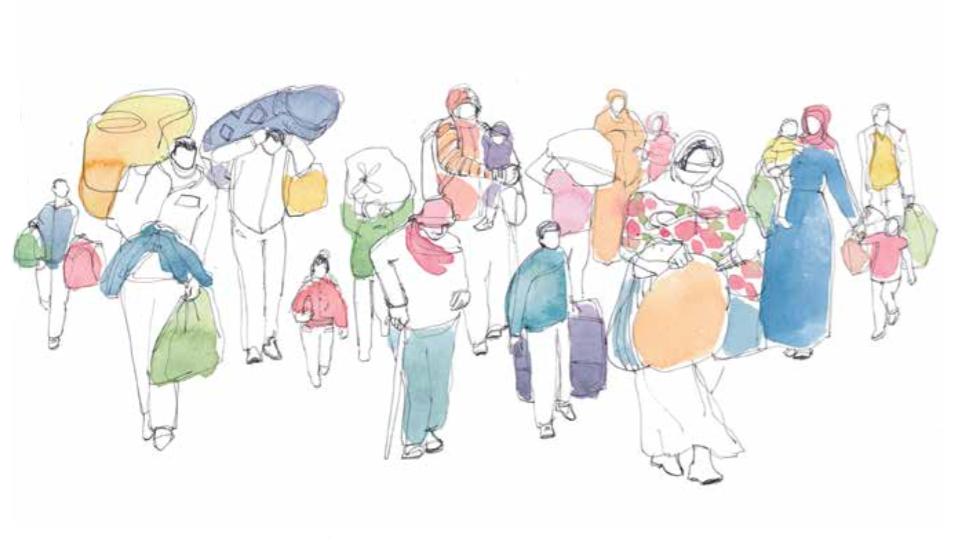
The world’s refugee camps are some of the most desolate backdrops against which people fleeing violence and persecution rebuild their lives.
The Akre Refugee Camp in Iraq, which houses hundreds of Syrian families, was built out of the remains of a former Saddam Hussein prison. The Za’atari Refugee Camp in Jordan, one of the world’s most populous refugee camps, consists of endless rows of beige tents and caravans with almost no plant or animal life.
Dust storms, heat, and blindingly bright sunlight make life unbearable for the more than 100,000 primarily Syrian residents. Without much structured activity or access to education, the thousands of children in these camps sit listlessly.
Initiatives like the Za’atari Project and the Castle Art Project are changing this bleak reality. Through these projects, children paint vividly colored murals on the walls of their temporary homes. They begin to work through the trauma they have experienced and to articulate and depict their dreams in technicolor. These projects create a sense of camaraderie and community amongst the participants and even provide a venue for the volunteers who run them to provide informal classes on water conservation, camp hygiene, and conflict resolution, in addition to artistic techniques.
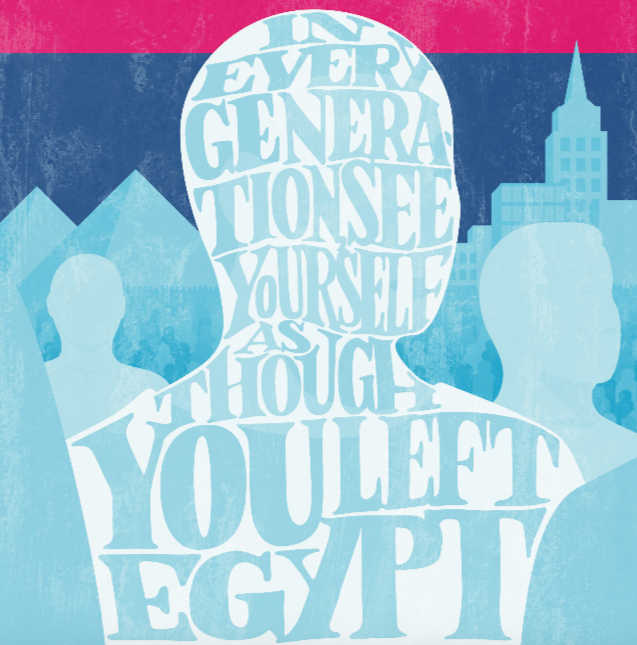
Throughout our history, violence and persecution have driven the Jewish people to wander in search of a safe place to call home. We are a refugee people. At the Passover Seder, we gather to retell the story of our original wandering and the freedom we found. But we do not just retell the story. We are commanded to imagine ourselves as though we, personally, went forth from Egypt – to imagine the experience of being victimized because of who we are, of being enslaved, and of being freed.
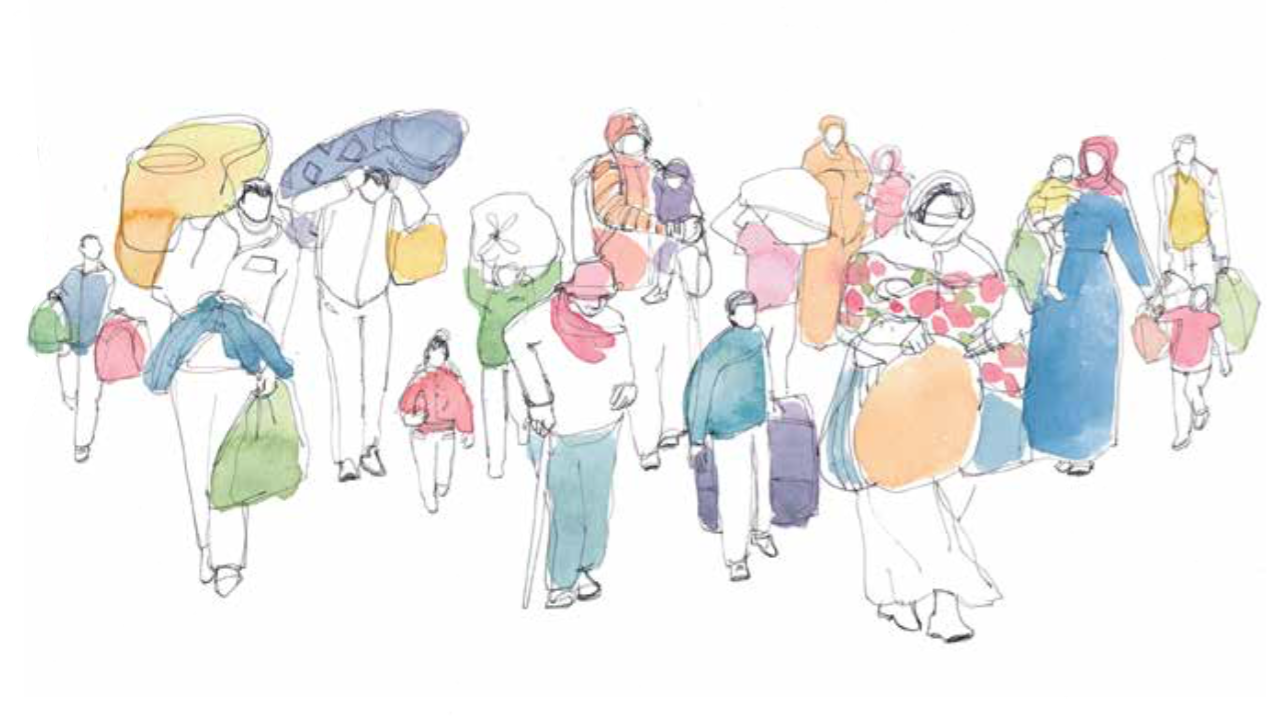
As we step into this historical experience, we cannot help but draw to mind the 65 million displaced people and refugees around the world today fleeing violence and persecution, searching for protection. Like our ancestors, today’s refugees experience displacement, uncertainty, lack of resources, and the complete disruption of their lives.
Over the past year, we have read almost daily about humanitarian crises, watched xenophobic hate crimes increase, and been overwhelmed by the sheer number of people being persecuted. In the United States, in particular, we have experienced a devastating closing of doors to refugees. We now have the opportunity this evening to move beyond the headlines and the statistics to focus on the individual experiences behind the numbers and policies. These are the experiences of refugees around the world who, like the ancient Israelites, are finding liberation amidst brokenness and rebuilding their lives. Tonight, as we embrace the experience of our ancestors, we also lift up the experiences of the world’s refugees who still wander in search of safety and freedom.
The world’s refugee camps are some of the most desolate backdrops against which people fleeing violence and persecution rebuild their lives.
The Akre Refugee Camp in Iraq, which houses hundreds of Syrian families, was built out of the remains of a former Saddam Hussein prison. The Za’atari Refugee Camp in Jordan, one of the world’s most populous refugee camps, consists of endless rows of beige tents and caravans with almost no plant or animal life.
Dust storms, heat, and blindingly bright sunlight make life unbearable for the more than 100,000 primarily Syrian residents. Without much structured activity or access to education, the thousands of children in these camps sit listlessly.
Initiatives like the Za’atari Project and the Castle Art Project are changing this bleak reality. Through these projects, children paint vividly colored murals on the walls of their temporary homes. They begin to work through the trauma they have experienced and to articulate and depict their dreams in technicolor. These projects create a sense of camaraderie and community amongst the participants and even provide a venue for the volunteers who run them to provide informal classes on water conservation, camp hygiene, and conflict resolution, in addition to artistic techniques.
Throughout our history, violence and persecution have driven the Jewish people to wander in search of a safe place to call home. We are a refugee people. At the Passover Seder, we gather to retell the story of our original wandering and the freedom we found. But we do not just retell the story. We are commanded to imagine ourselves as though we, personally, went forth from Egypt – to imagine the experience of being victimized because of who we are, of being enslaved, and of being freed.
As we step into this historical experience, we cannot help but draw to mind the 65 million displaced people and refugees around the world today fleeing violence and persecution, searching for protection. Like our ancestors, today’s refugees experience displacement, uncertainty, lack of resources, and the complete disruption of their lives.
Over the past year, we have read almost daily about humanitarian crises, watched xenophobic hate crimes increase, and been overwhelmed by the sheer number of people being persecuted. In the United States, in particular, we have experienced a devastating closing of doors to refugees. We now have the opportunity this evening to move beyond the headlines and the statistics to focus on the individual experiences behind the numbers and policies. These are the experiences of refugees around the world who, like the ancient Israelites, are finding liberation amidst brokenness and rebuilding their lives. Tonight, as we embrace the experience of our ancestors, we also lift up the experiences of the world’s refugees who still wander in search of safety and freedom.
showing
1-6
of
48
Page
1
of
8