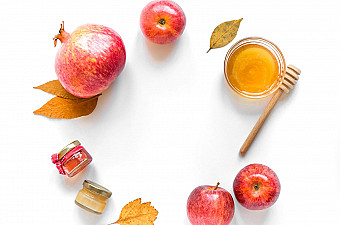
To bring in the new year, our litergy has songs that help us reflect on the past year and where we are going. Many modern songs can also have that effect. Some people have shared songs that help them reflect. We will listen to each followed by an explination of why the song reminds them of the new year.
Right now we are at the end of the Shmita (or Sabbatical) year. At this time in ancient israel, all loans between people were forgiven. Imagine Biden's student loan forgiveness but much more widespread.
Questions to ponder:
* How do loans impact people?
* What benefits come from a society-wide loan forgiveness? What negative impacts are there?
In the 1st century BCE, Rabbi Hillel, seeing that people in need could not get loans, instituted a work around such that loans would not need to be forgiven.
Questions to ponder:
* Why were loans not available to those in need then?
* Is it possible to design a society in which some of the benefits of a periodic loan forgiveness can still exist while mitigating the negative impacts? What would this look like?
There are not easy questions, and we will not have time to solve this tonight. As we enter a new seven year Shmita cycle, we can work towards ensuring that the world in 7 years is better than it currently is today.
Wine or grape juice are also standards of nearly every Jewish holiday. Before we eat we take a moment to say a blessing over a glass of wine. In this special version Rosh Hashanah is called Yom HaZikaron, the Day of Remembering, and Yom Truah, the Day of Calling Out. Tonight during our meal we will do some remembering, and some calling out. We will also focus on the gratitude we feel for the past year, and all of the blessings that it contained. L’chaim!
בָּרוּךְ אַתָּה יְיָ אֱלֹהֵֽינוּ מֶֽלֶךְ הָעוֹלָם בּוֹרֵא פְּרִי הַגָּֽפֶן
Barukh ata Adonai Eloheinu melekh ha’ olam borei peri hagafen.
Blessed are You, Adonai our God, Ruler of the universe, who creates the fruit of the vine.
Barukh atah Adonai Eloheinu melekh ha'olam asher bakhar banu m'kol am, v'romemanu m'kol lashon v'kidishanu b'mitzvotav. Vatiten lanu Adonai Eloheinu b'ahava et Yom HaShabbat ha'zeh v'et)Yom HaZikaron ha'zeh. Yom zichron teruah b'ahava mikra kodesh, zekher le'yitziat mitzrayim. Ki vanu vakharta v'otanu kidashtah m'kol ha'amim, u'devarkha emet v'kayam la'ad.
Barukh atah Adonai melekh al kol ha'aretz, mekadesh haShabbat v'Yisrael v'Yom HaZikaron.
Blessed are You, Adonai our God, Ruler of the universe, who has chosen us from among all peoples and sanctified us with God's commandments. And You gave us, Adonai our God, in love this Sabbath day and this Day of Remembrance. It is a Day of Remembrance a day for recalling with love the sounding of the Shofar, a sacred convocation, a commemoration of the Exodus from Egypt. For You chose us and sanctified us from among all peoples, and Your word is truth and endures forever.
Blessed are You, Ruler over all the earth, who sanctifies the Sabbath and Israel and the Day of Remembrance.
On Rosh Hashanah and throughout the High Holiday season, we eat challah in the shape of a circle, to symbolize the circle of time, and the fullness of the year that is coming. Many people add even more sweetness to their first challah of the new year by adding apples and raisins or by drizzling honey or jam on top.
As you take a bite, share with others around the table how you hope to bring sweetness into the world in the New Year.
בָּרוּךְ אַתָּה יְיָ אֱלֹהֵֽינוּ מֶֽלֶךְ הָעוֹלָם
הַמּֽוֹצִיא לֶֽחֶם מִן הָאָֽרֶץ
Barukh ata Adonai Eloheinu melekh ha’olam,
hamotzi lekhem min ha-aretz.
Blessed are You, Adonai our God,Ruler of the universe,
Who brings forth bread from the earth.
In sephardi traditions, Rosh Hashanah seders typically involve foods whose meanings are symbolized with puns. Since they are often based on aramaic and hebrew, they often don't translate well. Have you ever associated beets with retreating?
Since most of us speak english more proficiently than ancient hebrew, our our seder plate has english based puns. Let's go around guessing what the different foods mean, and then we can turn the page to see other interpretations.
Hear the Call, Heed the Call
“It will be a day of sounding for you – Yom Teruah yih’yeh la-chem,” our liturgy reads.
At this High Holiday season, we sound the shofar, the ram’s horn, to awaken our hearts and minds to the work of these days—the work of reflection, of atonement, of renewal.
The shofar’s plaintive wailing and piercing cries ask us to pay attention to those who live at the margins: the world’s nearly 80 million displaced people.
We hear the shofar calling us to our most deeply held values: to compassion, to welcome, to justice.
But it is not enough to merely hear the shofar. The Psalmist tells us that we are to know the sound of the shofar. To know the sound of the shofar is to heed its invitation to act on our values.
We heed the shofar’s call when we take action for the world’s refugees and asylum seekers, those whose lives are in danger for being who they are.
We heed the shofar’s call when we ensure that refugees and asylum seekers have pathways and resources to rebuild their lives in safety and with dignity.
We heed the shofar’s call when we speak out against anti-immigrant and anti-refugee sentiment, standing in solidarity with the oppressed—neighbor and stranger alike.
That is what it means to know the shofar’s call—not only to hear it but also to heed it.
We move from tekiyah—the first call of the shofar—to tekiyah gedolah—the great, final blast—by joining our voices, demanding that fear and racism are replaced with understanding and righteousness.
Like the twists and curves of the ram’s horn, the path forward is winding and sometimes uncertain. However the path unfolds, though, the sound of the shofar is clear as it stirs our souls.
Yom Teruah yih’yeh lanu—it is a day of sounding for us. May the sound of the shofar and the sound of our voices lifted together announce to all those seeking refuge that they are respected, protected, and welcomed.
To bring in the new year, our litergy has songs that help us reflect on the past year and where we are going. Many modern songs can also have that effect. Some people have shared songs that help them reflect. We will listen to each followed by an explination of why the song reminds them of the new year.
Right now we are at the end of the Shmita (or Sabbatical) year. At this time in ancient israel, all loans between people were forgiven. Imagine Biden's student loan forgiveness but much more widespread.
Questions to ponder:
* How do loans impact people?
* What benefits come from a society-wide loan forgiveness? What negative impacts are there?
In the 1st century BCE, Rabbi Hillel, seeing that people in need could not get loans, instituted a work around such that loans would not need to be forgiven.
Questions to ponder:
* Why were loans not available to those in need then?
* Is it possible to design a society in which some of the benefits of a periodic loan forgiveness can still exist while mitigating the negative impacts? What would this look like?
There are not easy questions, and we will not have time to solve this tonight. As we enter a new seven year Shmita cycle, we can work towards ensuring that the world in 7 years is better than it currently is today.
Wine or grape juice are also standards of nearly every Jewish holiday. Before we eat we take a moment to say a blessing over a glass of wine. In this special version Rosh Hashanah is called Yom HaZikaron, the Day of Remembering, and Yom Truah, the Day of Calling Out. Tonight during our meal we will do some remembering, and some calling out. We will also focus on the gratitude we feel for the past year, and all of the blessings that it contained. L’chaim!
בָּרוּךְ אַתָּה יְיָ אֱלֹהֵֽינוּ מֶֽלֶךְ הָעוֹלָם בּוֹרֵא פְּרִי הַגָּֽפֶן
Barukh ata Adonai Eloheinu melekh ha’ olam borei peri hagafen.
Blessed are You, Adonai our God, Ruler of the universe, who creates the fruit of the vine.
Barukh atah Adonai Eloheinu melekh ha'olam asher bakhar banu m'kol am, v'romemanu m'kol lashon v'kidishanu b'mitzvotav. Vatiten lanu Adonai Eloheinu b'ahava et Yom HaShabbat ha'zeh v'et)Yom HaZikaron ha'zeh. Yom zichron teruah b'ahava mikra kodesh, zekher le'yitziat mitzrayim. Ki vanu vakharta v'otanu kidashtah m'kol ha'amim, u'devarkha emet v'kayam la'ad.
Barukh atah Adonai melekh al kol ha'aretz, mekadesh haShabbat v'Yisrael v'Yom HaZikaron.
Blessed are You, Adonai our God, Ruler of the universe, who has chosen us from among all peoples and sanctified us with God's commandments. And You gave us, Adonai our God, in love this Sabbath day and this Day of Remembrance. It is a Day of Remembrance a day for recalling with love the sounding of the Shofar, a sacred convocation, a commemoration of the Exodus from Egypt. For You chose us and sanctified us from among all peoples, and Your word is truth and endures forever.
Blessed are You, Ruler over all the earth, who sanctifies the Sabbath and Israel and the Day of Remembrance.
On Rosh Hashanah and throughout the High Holiday season, we eat challah in the shape of a circle, to symbolize the circle of time, and the fullness of the year that is coming. Many people add even more sweetness to their first challah of the new year by adding apples and raisins or by drizzling honey or jam on top.
As you take a bite, share with others around the table how you hope to bring sweetness into the world in the New Year.
בָּרוּךְ אַתָּה יְיָ אֱלֹהֵֽינוּ מֶֽלֶךְ הָעוֹלָם
הַמּֽוֹצִיא לֶֽחֶם מִן הָאָֽרֶץ
Barukh ata Adonai Eloheinu melekh ha’olam,
hamotzi lekhem min ha-aretz.
Blessed are You, Adonai our God,Ruler of the universe,
Who brings forth bread from the earth.
In sephardi traditions, Rosh Hashanah seders typically involve foods whose meanings are symbolized with puns. Since they are often based on aramaic and hebrew, they often don't translate well. Have you ever associated beets with retreating?
Since most of us speak english more proficiently than ancient hebrew, our our seder plate has english based puns. Let's go around guessing what the different foods mean, and then we can turn the page to see other interpretations.
Hear the Call, Heed the Call
“It will be a day of sounding for you – Yom Teruah yih’yeh la-chem,” our liturgy reads.
At this High Holiday season, we sound the shofar, the ram’s horn, to awaken our hearts and minds to the work of these days—the work of reflection, of atonement, of renewal.
The shofar’s plaintive wailing and piercing cries ask us to pay attention to those who live at the margins: the world’s nearly 80 million displaced people.
We hear the shofar calling us to our most deeply held values: to compassion, to welcome, to justice.
But it is not enough to merely hear the shofar. The Psalmist tells us that we are to know the sound of the shofar. To know the sound of the shofar is to heed its invitation to act on our values.
We heed the shofar’s call when we take action for the world’s refugees and asylum seekers, those whose lives are in danger for being who they are.
We heed the shofar’s call when we ensure that refugees and asylum seekers have pathways and resources to rebuild their lives in safety and with dignity.
We heed the shofar’s call when we speak out against anti-immigrant and anti-refugee sentiment, standing in solidarity with the oppressed—neighbor and stranger alike.
That is what it means to know the shofar’s call—not only to hear it but also to heed it.
We move from tekiyah—the first call of the shofar—to tekiyah gedolah—the great, final blast—by joining our voices, demanding that fear and racism are replaced with understanding and righteousness.
Like the twists and curves of the ram’s horn, the path forward is winding and sometimes uncertain. However the path unfolds, though, the sound of the shofar is clear as it stirs our souls.
Yom Teruah yih’yeh lanu—it is a day of sounding for us. May the sound of the shofar and the sound of our voices lifted together announce to all those seeking refuge that they are respected, protected, and welcomed.
showing
1-6
of
24
Page
1
of
4