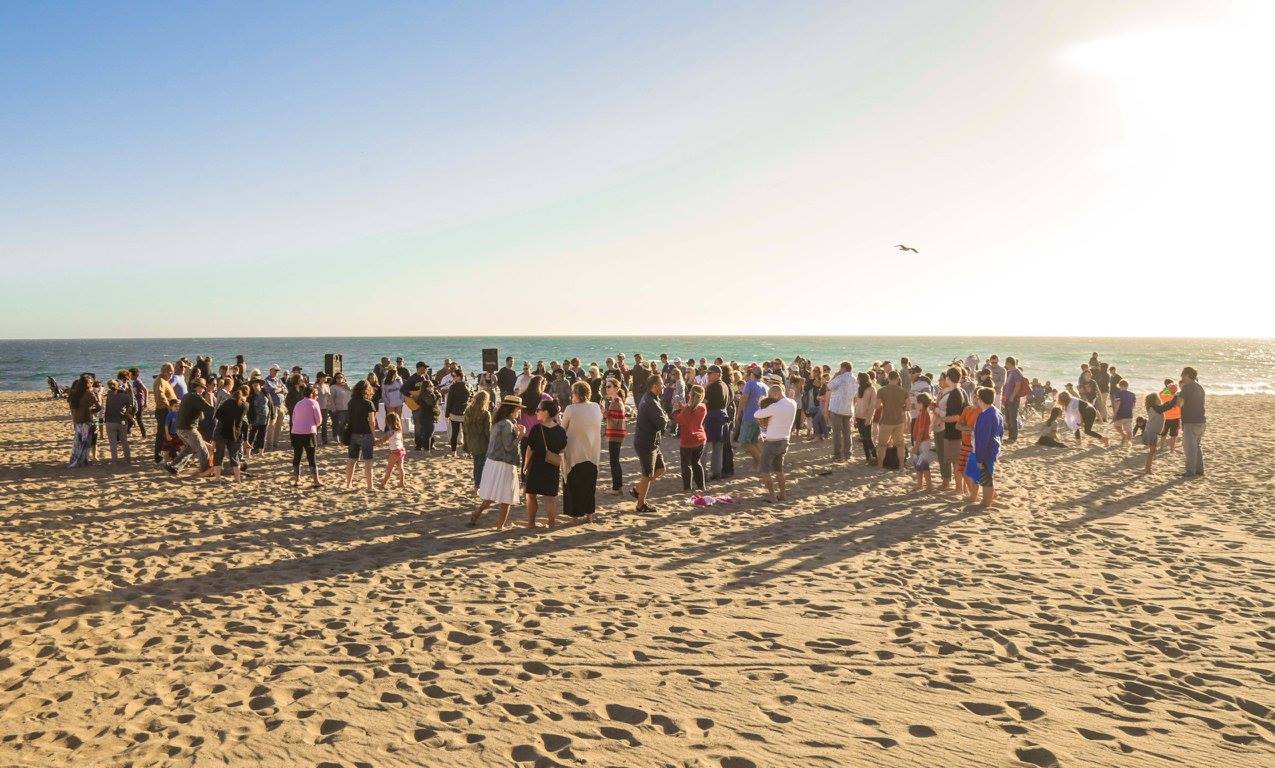
Tashlich ("to cast away") is a ceremony generally conducted on the first day of Rosh Hashanah in which we symbolically cast our sins into water. The custom of going to a body of water is a symbolic allusion, for the waters which now seem to be at this place were not here before and will not remain afterward. So, if the sinner says to himself or herself: "I will not repeat my sin; my behavior will change," the sin, like the waters, will move on.
On this sacred day
when the old year slips away
we prepare to meet the year ahead,
we stand at the water’s edge
our pockets lined with dust and bread,
symbols of our shortcomings and regrets.
Many are the regrets and sorrows
that weigh upon our souls,
let us cast them off into the moving waters
so we may begin anew.
Great is our regret
for the harsh words we have spoken,
the tender words we left unsaid,
for the anger we let smolder,
the compassion we withheld,
for our greed and jealousy,
our lack of generosity.
for all that we could have done,
all that we have left undone.
Many are the regrets and sorrows
that weigh upon our souls,
let us cast them into the moving waters
so we can strive to become
all that we were meant to be.
Great is our remorse
for the energy we spent fighting
instead of trying to make amends,
for the times we could have lent a hand
instead of keeping our hands by our sides,
for the times we looked away from those near and far
who need our help and caring,
when we turned away from the places in the world
in need of repairing.
Many are the regrets and sorrows
that weigh upon our hearts and souls,
let us cast them into the moving waters
so we can begin to build bridges
connecting us one to another.
- Elizabeth Tragash
The Ashamnu is an alphabetical acrostic of different sins we have committed. It is said in first-person plural, because while each individual may not have committed these specific sins, as a community we surely have, and our fates are intertwined on this day. This is a modern interpretationa of Ashamnu.
We have abandoned, we have appropriated, we have analyzed, we have arbitrated
We’ve belittled, we have broken faith, we have turned our backs, we have believed the unbelievable
We have grown numb, we’ve given too little, we’ve given too late, we have given up
We have denied, we have distorted, we have hesitated, we have held our tongues
We have victim-blamed, we have zoned out, we have chided, we have chastised
We have taken, we have turned away, we have yielded, we have yet to act
We have kept to ourselves, we’ve been complicit, we have laughed off, we have relied on the law,
We’ve made excuses, we have minimized, we’ve made light of, we have mocked
We have not noticed, we have neglected, we have negated, we have sent our regrets
We’ve averted our eyes, we have forsaken, we have pitied, we’ve failed to imagine new possibilities
We have explained, we’ve criticized, we have rationalized, we’ve refused responsibility
We’ve shamed the innocent, we have silenced, we have suppressed, we have failed to support
We have talked, we have talked, we have talked, but we have not listened
We have not sought the truth, we’ve theorized, we have told ourselves lies, and we have believed them
We cast into the depths of the sea our sins, and failures, and regrets.
Reflections of our imperfect selves flow away.
What can we bear,
with what can we bear to part?
We upturn the darkness, bring what is buried to light.
What hurts still lodge,
what wounds have yet to heal?
We empty our hands,
release the remnants of shame,
let go fear and despair
that have dug their home in us.
Open hands, opening heart —
The year flows out, the year flows in.
- Marcia Falk
An Ashamnu for the Mindset of Privilege from Fringes: A Feminist Havurah by Marcia Falk
Preview
More
Here I am again
ready to let go of my mistakes.
Help me to release myself
from all the ways I've missed the mark.
Help me to stop carrying
the karmic baggage of my poor choices.
As I cast this bread upon the waters
lift my troubles off my shoulders.
Help me to know that last year is over,
washed away like crumbs in the current.
Open my heart to blessing and gratitude.
Renew my soul as the dew renews the grasses.
- Rabbi Rachel Barenblat
CASTING AWAY
We cast into the depths of the sea our sins, and failures, and regrets.
Reflections of our imperfect selves flow away.
What can we bear,
with what can we bear to part?
We upturn the darkness, bring what is buried to light.
What hurts still lodge,
what wounds have yet to heal?
We empty our hands,
release the remnants of shame,
let go fear and despair
that have dug their home in us.
Open hands, opening heart —
The year flows out, the year flows in.
—Marcia Falk
Draw upon the middah, Jewish value, of yesod (יסוד), or groundedness, Yesod is about balance. In Jewish tradition it is said,
“Every person should have two pockets so he can reach into one or the other, according to his needs. In one pocket, carry a note that says ‘Bishvili Nivra Ha’Olam—For my sake, the world was created.’ In the other pocket, a note that says, ‘Anochi afar va’efer- I am dust and ashes.’” (Rabbi Simcha Bunim of Przysucha, 19th century CE).
At its core, this means we need to learn to hold two ideas at the same time: 1) I am worthy and have value simply by being me and 2) I have flaws and have made mistakes, so I need to grow. These two seemingly opposite, but actually synchronous ideas, mirror the themes of repentance, acceptance and forgiveness that create the Tashlich tradition.
Tashlich ("to cast away") is a ceremony generally conducted on the first day of Rosh Hashanah in which we symbolically cast our sins into water. The custom of going to a body of water is a symbolic allusion, for the waters which now seem to be at this place were not here before and will not remain afterward. So, if the sinner says to himself or herself: "I will not repeat my sin; my behavior will change," the sin, like the waters, will move on.
On this sacred day
when the old year slips away
we prepare to meet the year ahead,
we stand at the water’s edge
our pockets lined with dust and bread,
symbols of our shortcomings and regrets.
Many are the regrets and sorrows
that weigh upon our souls,
let us cast them off into the moving waters
so we may begin anew.
Great is our regret
for the harsh words we have spoken,
the tender words we left unsaid,
for the anger we let smolder,
the compassion we withheld,
for our greed and jealousy,
our lack of generosity.
for all that we could have done,
all that we have left undone.
Many are the regrets and sorrows
that weigh upon our souls,
let us cast them into the moving waters
so we can strive to become
all that we were meant to be.
Great is our remorse
for the energy we spent fighting
instead of trying to make amends,
for the times we could have lent a hand
instead of keeping our hands by our sides,
for the times we looked away from those near and far
who need our help and caring,
when we turned away from the places in the world
in need of repairing.
Many are the regrets and sorrows
that weigh upon our hearts and souls,
let us cast them into the moving waters
so we can begin to build bridges
connecting us one to another.
- Elizabeth Tragash
The Ashamnu is an alphabetical acrostic of different sins we have committed. It is said in first-person plural, because while each individual may not have committed these specific sins, as a community we surely have, and our fates are intertwined on this day. This is a modern interpretationa of Ashamnu.
We have abandoned, we have appropriated, we have analyzed, we have arbitrated
We’ve belittled, we have broken faith, we have turned our backs, we have believed the unbelievable
We have grown numb, we’ve given too little, we’ve given too late, we have given up
We have denied, we have distorted, we have hesitated, we have held our tongues
We have victim-blamed, we have zoned out, we have chided, we have chastised
We have taken, we have turned away, we have yielded, we have yet to act
We have kept to ourselves, we’ve been complicit, we have laughed off, we have relied on the law,
We’ve made excuses, we have minimized, we’ve made light of, we have mocked
We have not noticed, we have neglected, we have negated, we have sent our regrets
We’ve averted our eyes, we have forsaken, we have pitied, we’ve failed to imagine new possibilities
We have explained, we’ve criticized, we have rationalized, we’ve refused responsibility
We’ve shamed the innocent, we have silenced, we have suppressed, we have failed to support
We have talked, we have talked, we have talked, but we have not listened
We have not sought the truth, we’ve theorized, we have told ourselves lies, and we have believed them
We cast into the depths of the sea our sins, and failures, and regrets.
Reflections of our imperfect selves flow away.
What can we bear,
with what can we bear to part?
We upturn the darkness, bring what is buried to light.
What hurts still lodge,
what wounds have yet to heal?
We empty our hands,
release the remnants of shame,
let go fear and despair
that have dug their home in us.
Open hands, opening heart —
The year flows out, the year flows in.
- Marcia Falk
An Ashamnu for the Mindset of Privilege from Fringes: A Feminist Havurah by Marcia Falk
Preview
More
Here I am again
ready to let go of my mistakes.
Help me to release myself
from all the ways I've missed the mark.
Help me to stop carrying
the karmic baggage of my poor choices.
As I cast this bread upon the waters
lift my troubles off my shoulders.
Help me to know that last year is over,
washed away like crumbs in the current.
Open my heart to blessing and gratitude.
Renew my soul as the dew renews the grasses.
- Rabbi Rachel Barenblat
CASTING AWAY
We cast into the depths of the sea our sins, and failures, and regrets.
Reflections of our imperfect selves flow away.
What can we bear,
with what can we bear to part?
We upturn the darkness, bring what is buried to light.
What hurts still lodge,
what wounds have yet to heal?
We empty our hands,
release the remnants of shame,
let go fear and despair
that have dug their home in us.
Open hands, opening heart —
The year flows out, the year flows in.
—Marcia Falk
Draw upon the middah, Jewish value, of yesod (יסוד), or groundedness, Yesod is about balance. In Jewish tradition it is said,
“Every person should have two pockets so he can reach into one or the other, according to his needs. In one pocket, carry a note that says ‘Bishvili Nivra Ha’Olam—For my sake, the world was created.’ In the other pocket, a note that says, ‘Anochi afar va’efer- I am dust and ashes.’” (Rabbi Simcha Bunim of Przysucha, 19th century CE).
At its core, this means we need to learn to hold two ideas at the same time: 1) I am worthy and have value simply by being me and 2) I have flaws and have made mistakes, so I need to grow. These two seemingly opposite, but actually synchronous ideas, mirror the themes of repentance, acceptance and forgiveness that create the Tashlich tradition.
showing
1-6
of
34
Page
1
of
6