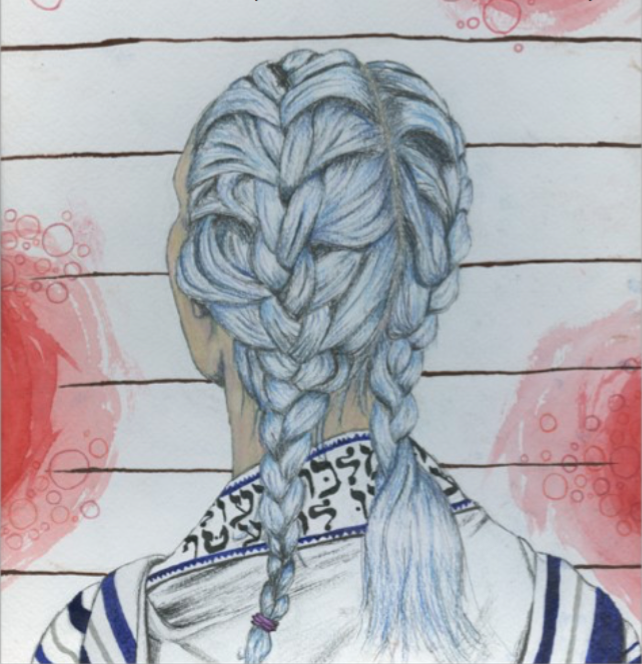
Revenge of Dinah: A Feminist Seder on Rape Culture in the Jewish Community
Preview
“God purposely leads the Hebrews to the seashore, where pharaoh will have reason to say, "The wilderness has shut them in!", i.e., nature itself is on the side of the powerful, and the prevailing hierarchy, where slaves remain slaves, is ordained by the gods. The point of the splitting of the Red Sea is that the elements that seem most immutable and unstoppable--the all-powerful despot, the annihilating army and the impassable ocean-- are precisely the ones we should see as the most transitory and changeable. The powers we tend to think we could never defeat, which maintain the terrible status quo, are the ones we have to believe will be defeated in the name of justice and other transcendent truths. If you believe in freedom, go to the impossible place that everyone says will never change. Go straight to the ocean and walk in.”
-Ezra Furman, queer musician and activist, Chicago, 2/10/17
Revenge of Dinah: Conclusion
Preview
More
A simple piece of Matzah serves to remind us of the immense suffering of ancient slavery. Now we take into account a second item, bitter chocolate, to remind us of modern suffering. One might question how chocolate is representative of hardship, for its purpose is to satisfy one’s pleasures, to be eaten in times of love and craving. Simply put, it is expected to be sweet, but when it is not, the unwanted chocolate is automatically dismissed and rejected. The expectations of chocolate is to be sweet and readily available for one’s satisfaction. Victims/survivors of rape culture can be seen in a similar light. A prize to be won by the hands of a pursuer, it softens, melts, drip, drip, drip. Their dignity mutilated down the wrist, almost ink, slowly hardening to etch su ering like blood. No longer a clean-cut square, the chocolate is transformed into a desired shape, sugar stu ed in to make it what it is not. Today, we embrace chocolate in its plain form, celebrating not its bitterness, but its strength.
Everyone at the table should eat a piece of bitter chocolate and consider quietly the ways in which they feel pressured to take shapes that aren’t natural to them.
The formal telling of the story of Passover is framed as a discussion with lots of questions and answers. The tradition is that the youngest person asks the questions because it re ects the centrality of involving everyone in the Seder. The rabbis who created the set format for the Seder gave us the Four Questions to help break the ice in case no one had their own questions. Asking questions is a core tradition in Jewish life. We would like to o er some questions of our own regarding the perpetuation of rape culture in the Jewish community. But this is just a jumping o point! What questions about rape culture are you curious about tonight?
1st Question: Why is rape culture hard to recognize sometimes?
Why is it such a normalized part of our culture? Why don’t people fully understand it? How can we change this?
Why does it sometimes feel like the Jewish community is absent or uninterested in addressing it?
2nd Question: Why do the media and pop culture continue to perpetuate the hyper-sexualization of women, the physical dominance of men, and invisiblize people who have non-binary genders?
What are the negative stereotypes that the media perpetuate, and what are their consequences?
What are examples of songs, ads, or other media that hypersexualize or invisiblize people based on gender?
How are young people particularly impacted by these negative messages?
3rd Question: Why, on this night, have we put bitter chocolate on the table?
What other foods might you choose to represent rape culture in this ritual? Why?
4th Question: How is this conversation about rape culture relevant to me?
How have I been implicated or impacted by rape culture?
What can I do to hold others in my life more accountable?
Revenge of Dinah: The Four Questions
Preview
More
This is a cultural problem. A fundamentally cultural problem. What is built into the system? The assumption that you must have done something. You knew him. You must have led him on. There are laws all over the country that in fact contributed to this no on that there's no need to respect a woman's autonomy because it's just not that important...It is never, never, never her fault. She could be drop - dead drunk. She could walk across the campus naked. Nobody, nobody, has a right to touch her. Nobody. And it will be a success when no young man actually believes [it] when he says to himself, “ Well, she deserved it ” or “ I had a right to do that. ”
Acknowledgements & About Us
Preview
More
Shedding light on our culture of permissiveness toward sexual violence, illuminating the truth of its damaging consequences, and bringing it out of the shadows, we kindle the candles to create light where, for many survivors of rape and sexual violence, there is only darkness. We hope to light a path to healing with our candles. We also consider these candles as a yahrzeit (memorial) to remember those who have lost their lives to sexual violence and rape.
Every person sitting at the table may light one candle while reciting in either Hebrew or English the following:
Together, we say:
May these candles, lit on the Festival of Freedom, bring light into our hearts and minds. May they renew our courage to act for justice and freedom here and now. May they illuminate the path to truth, justice and peace. And so we repeat the ancient blessing:
בָּרוּךְ אַתָּה יי אֱלֹהֵינוּ מֶלֶךְ הָעוֹלָם, אֲשֶׁר קִדְּשָנוּ בְּמִצְוֹתָיו וְצִוָּנוּ לְהַדלִיק נֵר שֶׁל יוֹם טוֹב
Baruch atah Adonai, Eloheinu Melech ha-olam,
asher kiddishanu b’mitzvotav, v’tzivanu lehadlik neir shel Yom Tov.
We praise God, spirit of everything, who has made us distinct through
Your directives and has directed us to kindle the holiday lights.
Revenge of Dinah: Candle Lighting
Preview
More
“God purposely leads the Hebrews to the seashore, where pharaoh will have reason to say, "The wilderness has shut them in!", i.e., nature itself is on the side of the powerful, and the prevailing hierarchy, where slaves remain slaves, is ordained by the gods. The point of the splitting of the Red Sea is that the elements that seem most immutable and unstoppable--the all-powerful despot, the annihilating army and the impassable ocean-- are precisely the ones we should see as the most transitory and changeable. The powers we tend to think we could never defeat, which maintain the terrible status quo, are the ones we have to believe will be defeated in the name of justice and other transcendent truths. If you believe in freedom, go to the impossible place that everyone says will never change. Go straight to the ocean and walk in.”
-Ezra Furman, queer musician and activist, Chicago, 2/10/17
Revenge of Dinah: Conclusion
Preview
More
A simple piece of Matzah serves to remind us of the immense suffering of ancient slavery. Now we take into account a second item, bitter chocolate, to remind us of modern suffering. One might question how chocolate is representative of hardship, for its purpose is to satisfy one’s pleasures, to be eaten in times of love and craving. Simply put, it is expected to be sweet, but when it is not, the unwanted chocolate is automatically dismissed and rejected. The expectations of chocolate is to be sweet and readily available for one’s satisfaction. Victims/survivors of rape culture can be seen in a similar light. A prize to be won by the hands of a pursuer, it softens, melts, drip, drip, drip. Their dignity mutilated down the wrist, almost ink, slowly hardening to etch su ering like blood. No longer a clean-cut square, the chocolate is transformed into a desired shape, sugar stu ed in to make it what it is not. Today, we embrace chocolate in its plain form, celebrating not its bitterness, but its strength.
Everyone at the table should eat a piece of bitter chocolate and consider quietly the ways in which they feel pressured to take shapes that aren’t natural to them.
The formal telling of the story of Passover is framed as a discussion with lots of questions and answers. The tradition is that the youngest person asks the questions because it re ects the centrality of involving everyone in the Seder. The rabbis who created the set format for the Seder gave us the Four Questions to help break the ice in case no one had their own questions. Asking questions is a core tradition in Jewish life. We would like to o er some questions of our own regarding the perpetuation of rape culture in the Jewish community. But this is just a jumping o point! What questions about rape culture are you curious about tonight?
1st Question: Why is rape culture hard to recognize sometimes?
Why is it such a normalized part of our culture? Why don’t people fully understand it? How can we change this?
Why does it sometimes feel like the Jewish community is absent or uninterested in addressing it?
2nd Question: Why do the media and pop culture continue to perpetuate the hyper-sexualization of women, the physical dominance of men, and invisiblize people who have non-binary genders?
What are the negative stereotypes that the media perpetuate, and what are their consequences?
What are examples of songs, ads, or other media that hypersexualize or invisiblize people based on gender?
How are young people particularly impacted by these negative messages?
3rd Question: Why, on this night, have we put bitter chocolate on the table?
What other foods might you choose to represent rape culture in this ritual? Why?
4th Question: How is this conversation about rape culture relevant to me?
How have I been implicated or impacted by rape culture?
What can I do to hold others in my life more accountable?
Revenge of Dinah: The Four Questions
Preview
More
This is a cultural problem. A fundamentally cultural problem. What is built into the system? The assumption that you must have done something. You knew him. You must have led him on. There are laws all over the country that in fact contributed to this no on that there's no need to respect a woman's autonomy because it's just not that important...It is never, never, never her fault. She could be drop - dead drunk. She could walk across the campus naked. Nobody, nobody, has a right to touch her. Nobody. And it will be a success when no young man actually believes [it] when he says to himself, “ Well, she deserved it ” or “ I had a right to do that. ”
Acknowledgements & About Us
Preview
More
Shedding light on our culture of permissiveness toward sexual violence, illuminating the truth of its damaging consequences, and bringing it out of the shadows, we kindle the candles to create light where, for many survivors of rape and sexual violence, there is only darkness. We hope to light a path to healing with our candles. We also consider these candles as a yahrzeit (memorial) to remember those who have lost their lives to sexual violence and rape.
Every person sitting at the table may light one candle while reciting in either Hebrew or English the following:
Together, we say:
May these candles, lit on the Festival of Freedom, bring light into our hearts and minds. May they renew our courage to act for justice and freedom here and now. May they illuminate the path to truth, justice and peace. And so we repeat the ancient blessing:
בָּרוּךְ אַתָּה יי אֱלֹהֵינוּ מֶלֶךְ הָעוֹלָם, אֲשֶׁר קִדְּשָנוּ בְּמִצְוֹתָיו וְצִוָּנוּ לְהַדלִיק נֵר שֶׁל יוֹם טוֹב
Baruch atah Adonai, Eloheinu Melech ha-olam,
asher kiddishanu b’mitzvotav, v’tzivanu lehadlik neir shel Yom Tov.
We praise God, spirit of everything, who has made us distinct through
Your directives and has directed us to kindle the holiday lights.
Revenge of Dinah: Candle Lighting
Preview
More
showing
1-6
of
41
Page
1
of
7