Mix-and-match
Explore content in our extensive library and pull it together into your own Jewish ritual booklet that honors and recognizes whatever life has brought your way.
Share a ritual
Add your own original content as a clip to our extensive library - a poem, blessing, or something else entirely. Someone out there is looking for exactly what only you can create.
Support us
with your donation.
Help us build moments of meaning and connection through home-based Jewish rituals.
Featured clips
Prayer for Rain in the Merit of the Matriarchs
By Rabbi Jill Hammer
Sukkot is a time of fullness and generosity, but also a time to pray for the coming season. Shemini Atzeret, the festival when we pray for rain, is an expression of our need for water, which in the Jewish tradition symbolizes life, renewal, and deliverance. The Geshem (Rain) Prayer speaks of five patriarchs. In that spirit, I have included five verses, for Sarah, Rebekah, Rachel, and Leah, and for Miriam the prophetess, paralleling verses for Abraham, Isaac, Jacob, Moses, and Aaron. This prayer uses water as a metaphor for devotion and faith, asking that God grant us life-sustaining rain.
Remember the beautiful one: her radiance pure as water!
She welcomed new souls through immersion in water.
In her old age her breasts flowed with milk like water.
Her offspring will increase like grains of sand near seas of water.
For Sarah’s sake, do not withhold water.
Remember the maiden: rising up to greet her, water!
She let down her pitcher and gave to the thirsty water.
She drew even for camels from the well of water.
Over her tent hovered a divine cloud full of water.
For the sake of Rebekah’s righteousness, grant the gift of water.
Remember the shepherdess: she brought her sheep to water!
She wrestled God-wrestlings mightier than crashing water.
For her exiled children she weeps tears of water,
and they will return to their land like returning streams of water.
For Rachel’s sake, do not withhold water.
Remember the hidden one: her veil like a fall of water!
Her womb and her deeds were more abundant than springs of water.
She praised You for Your glory as there flowed from her birth water.
King and priest suckled her as lilies suckle water.
For the sake of Leah’s righteousness, grant the gift of water.
Remember the sister: she watched at a distance from water!
She spoke softly to newborns and saved them from the river of water.
She took up her timbrel and sang at the parting of water.
For her sake, You granted the people a well of water.
For Miriam’s sake, do not withhold water.
To learn more about this prayer, visit: https://opensiddur.org/prayers/lunisolar/joyful-days/shemini-atseret/a-geshem-prayer-invoking-the-matriarchs/
Prayer for Rain by Rabbi Jill Hammer
Preview
More
Do not interfere. Do not offer your opinions or give unsolicited advice. Do not criticize their decisions, even if they are difficult for you to abide by, such as stopping treatment or building a family in a way that seems usual to you.
Do not tell them to relax. This feels dismissive and demeaning to someone struggling to build a family. Achieving a successful pregnancy does not occur because of relaxation.
Do not invoke God. Do not suggest that their pain is God’s will and if they are meant to be a parent, it will happen. This can bring up profoundly troubling and painful existential issues.
Do not minimize their pain. Jewish tradition and the Jewish community center around the family unit. Jews have always been encouraged to “be fruitful and multiply.” When this natural process becomes difficult and people are unable to realize their communal and personal aspirations, there are often profound personal and psychological implications.
Do not blame. Suggesting that lifestyle choices they made or events beyond their control are responsible for their infertility is insensitive, and in almost all cases, untrue.
People often talk about Elizabeth Kubler-Ross’s five stages of grief – denial, anger, bargaining, depression, and acceptance – as if they happen in order. They think that one must completely go through one stage before moving to the next, and when they finally get to the end, they will never grieve again. You might hear people say things like “Oh I’ve moved on from denial, and now I think I’m entering the angry stage.” But this isn’t often the case.
Emotional healing from pregnancy loss does not happen in a prescribed way. Kübler-Ross, in her writing, makes it clear that the stages are not linear – people can experience these aspects of grief at different times and they do not happen in one particular order. It’s unpredictable at best, and does not follow any specified pattern or rules.
Anger, sadness, relief, shock, guilt, numbness, frustration, yearning, desperation, loneliness….and more. They do not happen in any particular order, may happen over and over again, or may even be triggered by unexpected things. Every day, every week, every month, and even every year may come with a new (or newly revived) emotion.
These are all normal when it comes to grief.
It’s normal to…
What you are feeling….whatever you are feeling…It’s normal. Because grief doesn’t do as you say. And trying to control it can be anywhere from difficult to impossible.
It isn’t surprising that people struggle so much after infertility and/or loss. So many of us have been there too, and calling it ‘hard’ would be an understatement. But we do have the ability to learn to live with our grief. We are born with that gift.
Remind yourself that you can do this. You are not broken. You are changed. You can grow with this change and learn to live with it. It’s not about getting through it - it’s about learning to live with it. Give yourself love as you try to wade through all the waves of emotion.
Reflection Prompts
Source: I was Supposed to Have a Baby
Recognizing the Non-Linear Nature of Healing
Preview
More
If you have a loved one who is struggling to build their family your heart may ache for them and you may wonder how you can offer them support. It is often hard to know what to say, and you may find that there are many moments when you feel powerless and unable to help them get closer to the life they dream of. This resource offers you a number of pathways through which you can offer support to your loved one. It may also help you to better distinguish between actions to avoid and actions to embrace.
This piece was authored by Stacie Baker, a social worker who has worked with Uprooted: A Jewish Response to Fertility Journeys. Uprooted has created a number of Jewish resources designed to offer emotional and spiritual support to those struggling to build their families. Uprooted also has created resources for loved ones who may also grapple with many complicated emotions as they watch their family member or friend experience a fertility journey.

“It is literally impossible to be a modern Jewish woman”
Preview
More
Partners experience fertility treatment differently. Even if they go through every step together, what is happening does not happen inside both bodies. Typically, only one body is receiving treatment, and the other person acts as a support system for the person undergoing treatment.
In other words…
Both partners do not typically experience the actual miscarriage or stillbirth, undergo surgeries, receive endless injections, attend weekly early morning appointments for bloodwork and ultrasounds, and get pumped with hormones - all while trying to keep their job, family, and friends from knowing what's going on. The exception being couples doing reciprocal IVF where one partner’s eggs are retrieved and fertilized by donated sperm through an IVF procedure, and the resulting embryo(s) is implanted into the partner for pregnancy as a gestational carrier.
Moreover, in many situations, it is only one partner who has the pain of knowing that their body is the one that “doesn’t work.” They may feel to blame for their partner needing to go through surgeries, injections, and hormones. They might feel they are to blame for having to spend all of their savings on conception alone. They might feel responsible if years after they began trying - they still have no baby to show for it. Or maybe there was a loss… or several. The feeling of being at fault can be extremely stressful and isolating.
Being a partner who is exclusively (or mostly) a supporter can be difficult as well. There is the feeling that you can’t take the pain and guilt away from the person you love. Not blaming our partner, but also wondering if you could be living an easier life with someone else. Debating if it’s all worth it and then feeling guilty for even ever thinking that. Some also struggle with the knowledge that they are the reason their partner is going through so much pain. And this is only the tip of the iceberg of emotions that go through the minds of those undergoing treatment.
Relationships are hard without all of this extra stress. And many couples who go through infertility treatments don’t survive the journey.
But at the same time, many do survive and come out stronger, and better equipped to face adversity together over the rest of their lives. In many instances, a couple who does not survive treatment is likely a couple who wouldn’t have survived other life challenges had they faced them - or when they inevitably do face them.
Relationships are about connection, understanding, and patience. Through patience, listening, caring, and being present, a couple can hope to understand each other better and learn to be there for each other as best as possible. To reach this goal, each individual must work to understand their own needs first, vocalize those needs in a way that their partner can internalize them…. and their partner needs to be able to implement them - and vice versa… with room for mistakes and compromise.
The couple will need to work and evolve together - and isn’t this what it means to be in a relationship? To work through these trials and tribulations of life together, side by side, supporting ourselves as well as each other? In other words - it IS doable. It is also hard - but it is doable. If we take the time to be patient and recognize that our partners' needs are likely different from our own, we can reach a place where we see each other for who we are and can accept and respect wherever the other person is holding in all of this.
Journaling Prompts
Source: I was Supposed to Have a Baby
Impact of Infertility on Our Relationships With Non-Carrying Partners
Preview
More
showing
1-6
of
8
Page
1
of
2
Featured ritual books

Passover for a Fertility Journey
Preview

Blessings for IUI / IVF / Family Building
Preview
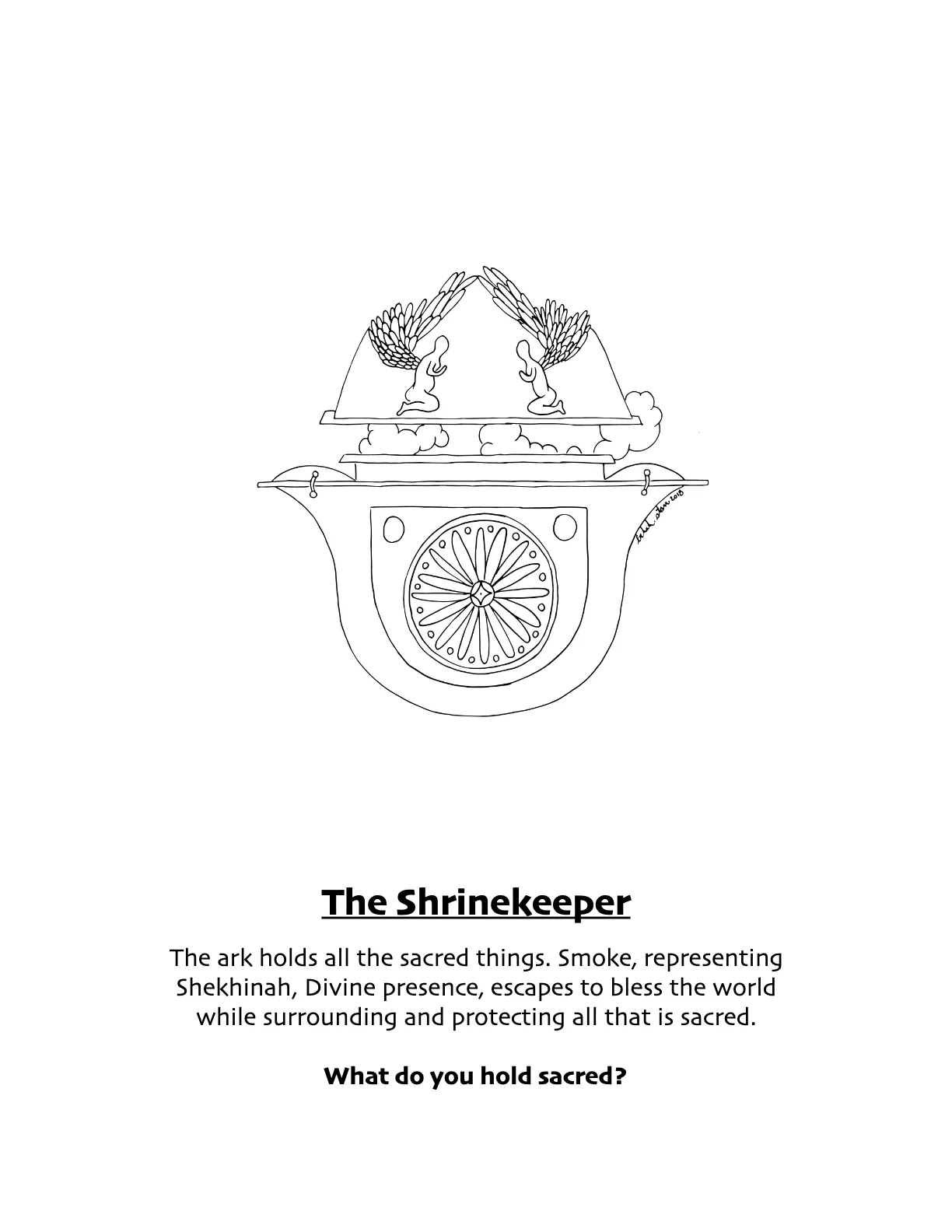
Hamsas of the Divine Feminine
Preview
Reimagined Rituals for Pregnancy, Birth and Postpartum
Preview
Supporting Someone Through a Fertility Journey
Preview
Navigating a Fertility Journey
Preview
showing
1-6
of
8
Page
1
of
2


