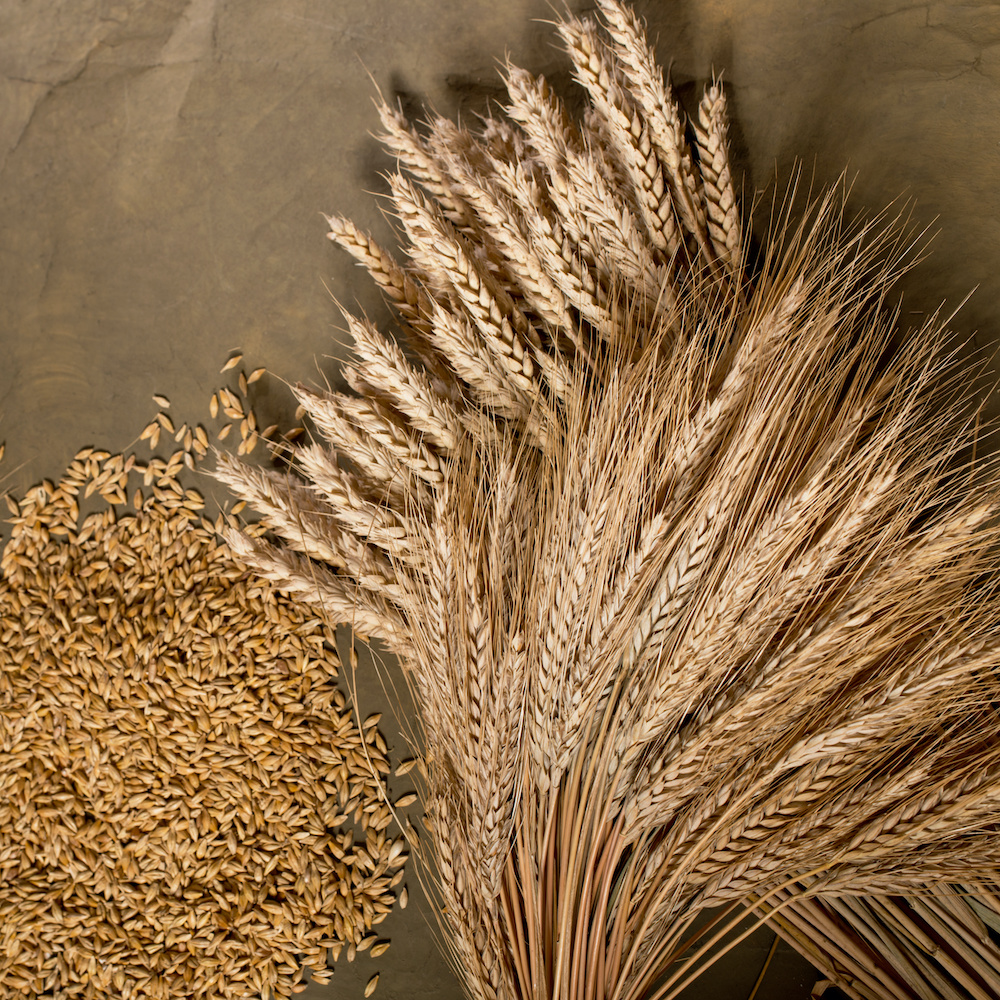
Did you know that the seven weeks between Passover and Shavuot have their own special significance in Jewish tradition? These 49 days are known as the Omer period, representing the sacrificial grain offerings that were once brought to the Temple during this time.
Traditionally, Jews track each of these days as part of a practice called Counting the Omer. Public celebrations and festivals were once put on pause in order for people to more fully engage with the reflective nature of the Omer count.
Each week of the Omer is associated with a particular aspect of Divinity. The count begins this year at the close of the second Passover Seder and Shabbat on Saturday, April 16th, with the sephira, or Divine aspect, of Chesed (Lovingkindness).
The sephirot (plural of sephira) in the weeks following Chesed are, in order, Gevurah (Boundaries), Tiferet (Balance), Netzach (Endurance), Hod (Surrender), Yesod (Foundation), and Malchut/Shekhinah (Sovereignty).
Counting the Omer is an ancient ritual, but it’s also one that can still be relevant to us today when we reframe it as a mindfulness practice.
Here are some simple ritual ideas to calm your mind and soothe your soul!
Our last sephirot is Malchut/Shekhinah, or sovereignty. What is sovereignty? Associated with kingship, dominion, and divinity, sovereignty is the call to become more fully yourself as a being rooted in the dignity and love that is the birthright of all people.
Write a letter to your higher self, that is, to the wise and compassionate part of you connected to something beyond. What do you wish to learn from this aspect of yourself? In the following days, keep an eye out for any answers that may be wanting to come through. You never know through what ways your higher self might want to communicate.
When the week is over, place a hand on your heart and thank yourself for this Omer practice.
Netzach, the fourth Divine aspect, represents endurance. How has your drive or resilience enabled you to accomplish things in your life?
Call to mind something that you’ve been putting off. How might you approach that task with an eye to endurance and sustainability? Take a deep breath and imagine yourself successfully completing that task. What mental shift will it take in order for this to happen in reality?
Gevurah, or boundaries, is the second Divine emanation that we will explore, and it signifies the other side of the coin from chesed. Limitations and containment are a necessary corollary to limitless lovingkindness. Is there anywhere in your life where you could stand to have better boundaries?
This week, try box breathing: inhale for four counts, hold for four counts, exhale for four counts, and hold again for four counts. How does it feel to structure your breath?
The sixth sephirot on our journey is yesod, or foundation, a fundamental aspect of our existence on this earth. What is a tree without its roots?
Close your eyes and visualize yourself as connected to the earth, whether you are sitting directly on the ground outside or many stories up in a high-rise. Picture roots moving down from your legs and into the earth, anchoring you gently to the soil. Remember that you are whole.
The first emanation of the Divine that we will be focusing on is chesed, or lovingkindness, which can be understood as an expansive energy without limitations, such as unconditional love. How is chesed showing up in your life right now? How might you like it to show up?
Place a hand on your heart and take one deep breath, focusing on breathing lovingkindness into your whole being, especially to parts of you that really need it. Feel free to do this once, each day, or whenever feels good!
showing
1-6
of
8
Page
1
of
2