by Rabbi Dr. Lisa Vendeland
Reid Scott is quoted as saying, “For as long as I can remember, I’ve always had pets. Something about the connection you share with this entirely different species just blows my mind.”
They are intelligent and perceptive. They comfort us and humanize us. They make us better people. Our family has always had pets. This isn’t too surprising since more than 470 million dogs and 370 million cats are kept as pets worldwide (fish and birds are also very popular pet choices).
They are an integral part of our families. In our faith tradition, we enjoy many baby-naming and covenanting rituals. Here is one that my family asked me to write to use when adopting and naming a new pet.
Dear Holy One of blessing,
We are gathered together and filled with joy today
as we adopt and name this precious soul
who has chosen us to care for them.
(May insert how the pet came to the individual or family.)
Help us strive to meet their needs with love,
compassion, and tenderness.
Bless them that they learn trust and love.
May the paths of Torah guide us every day
to treat our new charge humanely, meeting their needs
before our own.
May we enjoy many good years of companionship with each other.
Joyfully, we give the name ___________,
(for the reason) or (because) _______________.
L’Chaim!
(Apply a collar or new name tag, then provide a toy or treat to the pet.)
Don’t forget to mark the occasion with plenty of pictures!
A Ritual and Prayer Upon Adopting and Naming a Pet
Preview
More
Some leave a small section of wall unfinished/unpainted in memory of the destruction of the Temple
Zecher L’churban
Preview
More
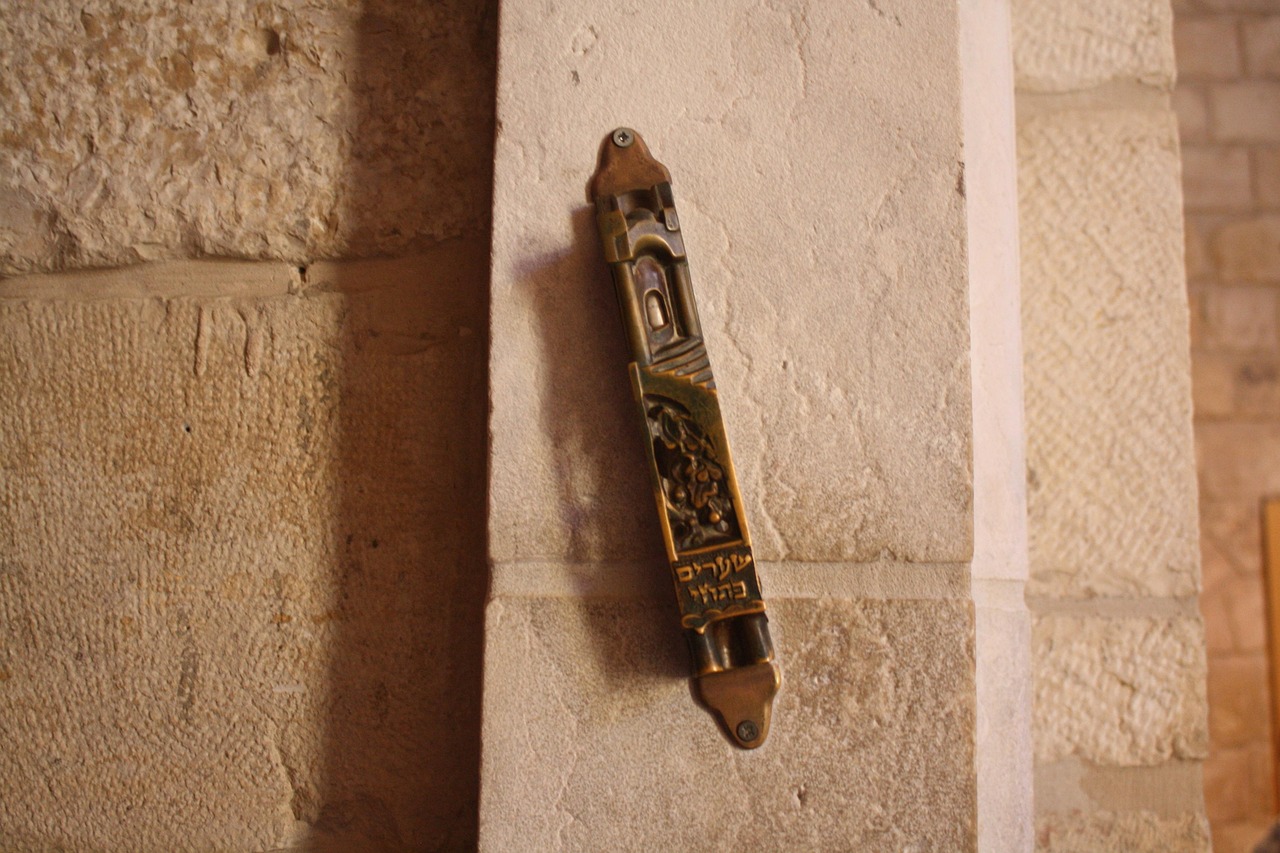
Affix a mezuzah to the doorways through which one commonly enters the home and rooms. The mezuzah is placed at least 2/3 up from the floor (or in the top 1/3), tilting in toward the house or room on the right side as you would enter.
Why is the mezuzah tilted? There was a debate among medieval commentators as to whether it should be vertical or horizontal. In a remarkably unique gesture toward inclusivity, the rabbis decided on a compromise position of placing the mezuzah at an angle inviting us to remember the necessity of compromise within the doorposts of your home.
Want to learn more about the rabbinic debate? Read My Jewish Learning's summary.
Why do we tilt the Mezuzah? (Ashkenazi)
Preview
More
The Danish call it "hygge," a sense of feeling cozy and safe at home. Many Jewish homes feature Birkat HaBayit, a blessing of protection on a plaque. What feels and blessing do you want to invite into your home? Create your own using this template.
Let this home be filled with:
May we support each other through:
May we always feel:
Peace in the home is an important Jewish value. Whether it’s helping family members resolve conflicts or mediating a dispute between friends or colleagues, promoting peace requires patience, understanding, and empathy.
Do something today that helps make your home feel more peaceful. Add in a new plant. Play calm music. Commit to an evening without yelling at the kids. Tell your roommate how special they are. Clean up your dinner dishes. Even a small act can help your life feel more peaceful.
Bring Peace Into Your Home (English; Shalom Bayit)
Preview
More
Like any ritual, you don’t need to wait for the next holiday or major lifecycle event to recite the shehecheyanu. You can bring this blessing into your everyday life, by transforming ordinary moments into milestones.
When we bring intention to something and give it our full attention, we elevate the mundane into a ritual that’s worthy of a shehecheyanu blessing. By taking an active role in ritual and creating personally meaningful practices, we can better care for ourselves and each other in difficult times.
Connecting with our senses helps us notice the amazing all around us. Here are some ideas to engage your senses and discover opportunities to say the shehecheyanu.
Using a journal or the space below, reflect on the milestone(s) you wish to celebrate by saying the shehecheyanu. What are you grateful for in this exact moment, today, in this wondrous life you are blessed to live?
Create Your Own Shehecheyanu Milestone
Preview
More
by Rabbi Dr. Lisa Vendeland
Reid Scott is quoted as saying, “For as long as I can remember, I’ve always had pets. Something about the connection you share with this entirely different species just blows my mind.”
They are intelligent and perceptive. They comfort us and humanize us. They make us better people. Our family has always had pets. This isn’t too surprising since more than 470 million dogs and 370 million cats are kept as pets worldwide (fish and birds are also very popular pet choices).
They are an integral part of our families. In our faith tradition, we enjoy many baby-naming and covenanting rituals. Here is one that my family asked me to write to use when adopting and naming a new pet.
Dear Holy One of blessing,
We are gathered together and filled with joy today
as we adopt and name this precious soul
who has chosen us to care for them.
(May insert how the pet came to the individual or family.)
Help us strive to meet their needs with love,
compassion, and tenderness.
Bless them that they learn trust and love.
May the paths of Torah guide us every day
to treat our new charge humanely, meeting their needs
before our own.
May we enjoy many good years of companionship with each other.
Joyfully, we give the name ___________,
(for the reason) or (because) _______________.
L’Chaim!
(Apply a collar or new name tag, then provide a toy or treat to the pet.)
Don’t forget to mark the occasion with plenty of pictures!
A Ritual and Prayer Upon Adopting and Naming a Pet
Preview
More
Some leave a small section of wall unfinished/unpainted in memory of the destruction of the Temple
Zecher L’churban
Preview
More
Affix a mezuzah to the doorways through which one commonly enters the home and rooms. The mezuzah is placed at least 2/3 up from the floor (or in the top 1/3), tilting in toward the house or room on the right side as you would enter.
Why is the mezuzah tilted? There was a debate among medieval commentators as to whether it should be vertical or horizontal. In a remarkably unique gesture toward inclusivity, the rabbis decided on a compromise position of placing the mezuzah at an angle inviting us to remember the necessity of compromise within the doorposts of your home.
Want to learn more about the rabbinic debate? Read My Jewish Learning's summary.
Why do we tilt the Mezuzah? (Ashkenazi)
Preview
More
The Danish call it "hygge," a sense of feeling cozy and safe at home. Many Jewish homes feature Birkat HaBayit, a blessing of protection on a plaque. What feels and blessing do you want to invite into your home? Create your own using this template.
Let this home be filled with:
May we support each other through:
May we always feel:
Peace in the home is an important Jewish value. Whether it’s helping family members resolve conflicts or mediating a dispute between friends or colleagues, promoting peace requires patience, understanding, and empathy.
Do something today that helps make your home feel more peaceful. Add in a new plant. Play calm music. Commit to an evening without yelling at the kids. Tell your roommate how special they are. Clean up your dinner dishes. Even a small act can help your life feel more peaceful.
Bring Peace Into Your Home (English; Shalom Bayit)
Preview
More
Like any ritual, you don’t need to wait for the next holiday or major lifecycle event to recite the shehecheyanu. You can bring this blessing into your everyday life, by transforming ordinary moments into milestones.
When we bring intention to something and give it our full attention, we elevate the mundane into a ritual that’s worthy of a shehecheyanu blessing. By taking an active role in ritual and creating personally meaningful practices, we can better care for ourselves and each other in difficult times.
Connecting with our senses helps us notice the amazing all around us. Here are some ideas to engage your senses and discover opportunities to say the shehecheyanu.
Using a journal or the space below, reflect on the milestone(s) you wish to celebrate by saying the shehecheyanu. What are you grateful for in this exact moment, today, in this wondrous life you are blessed to live?
Create Your Own Shehecheyanu Milestone
Preview
More
showing
1-6
of
35
Page
1
of
6