Mix-and-match
Explore content in our extensive library and pull it together into your own Jewish ritual booklet that honors and recognizes whatever life has brought your way.
Share a ritual
Add your own original content as a clip to our extensive library - a poem, blessing, or something else entirely. Someone out there is looking for exactly what only you can create.
Support us
with your donation.
Help us build moments of meaning and connection through home-based Jewish rituals.
Featured clips
As Jews in diaspora, we can struggle to find a connection to our homeland. But just like a tortoise in the desert, we take our home with us.
INSPIRATION
The inspiration for this practice comes from my intersectional roots as both Japanese and Jewish. My Japanese mother had a practice where we weren’t allowed to wear new shoes outside of the house without putting ashes on the soles. The ashes were from incense burned to honor our ancestors. As we walked out into the world, we brought our ancestors with us, and were indelibly connected to them.
INTENTION
This is a ritual for CONNECTION and RETURN to one’s roots, as well as a reminder that as much as it is there to protect us, we also have an obligation to be STEWARDS to our homeland - including and especially while in diaspora.
TIME FRAME
This ritual BEGINS at the start of Rosh Hashanah and ENDS at the conclusion of Yom Kippur.
THE RITUAL
TEXT IN RED should be said by the lead practitioner who is sharing this ritual with others, or if sole practitioner, said to themselves.
TEXT IN BLUE should be said by all, in unison.
BEGINNINGS
1)
*** This is your soil, brought forth by you, representing where you are today as your practice begins, and where your practice has led you. I
f you are returning, bring forth your soil which you have safeguarded on your journeys.***
2)
In the entranceway to your home, spill out your soil to create approximately one square foot of space, in any shape or form.
*** This is your soil in your home. It is yours to celebrate and connect with.***
3)
Write ISRAEL in the soil in your native language.
*** This square foot of earth IS your piece of Israel. It is your homeland. Your connection to it is ABSOLUTE through the fact of being Jewish. Your physical presence in diaspora, appearance or racial presentation, or blood quantum have no bearing on your legitimacy as a Jew with a connection to the land of Israel. Being Jewish is enough. YOU are enough.***
In your mother language, honoring the land, we say in unison:
“This is my land. This is my home. This is my Israel.”
EN/DURING
1)
Prepare with spiritual vigilance.
***At the end of each day, you will find your home soil WILL have been disturbed. Do not be shocked or surprised. Without vigilance, the forces of entropy will lay siege upon your earth. Wind may disturb it. An accidental footstep may disturb it. Those who are offended by the concept or word ISRAEL may intentionally attempt to erase ISRAEL from your soil, your home, and your heart. This is to be expected.***
2)
Restore.
***We will rebuild.***
At sunset each night, reinforce the edges where your earth has been disturbed. Retrace and rewrite the name of ISRAEL. Renew and replenish the earth as needed. You are the guardian and steward of this one square foot of ISRAEL. It is your responsibility to safeguard this small piece of soil that connects you to your homeland.
***We do not pretend to be surprised that there are those that would erase the name of Israel from the earth. But we do not shy away from our obligation to rebuild and restore it.***
Upon restoration, we say in unison:
“This is my land. This is my home. This is my Israel.”
RESOLUTION
1)
On the final night, at the end of Yom Kippur, you will reinforce your square foot of land, retrace the name of ISRAEL, and say in unison:
“This is my land. This is my home. This is my Israel.”
2)
***Safeguard this land and take ISRAEL with you.***
Upon restoration, gather the soil in your hands and pour it into a container to safeguard until the next Rosh Hashanah.
***Your soil can also be shared with others to bring with them through diaspora. Children can seed their containers from the soil of the parents. Newcomers to the practice can start their tradition through connection with your earth. Go forth as stewards, with ISRAEL in your heart.***
Ritual by Stephen Nolly
The Diaspora Tortoise by Stephen Nolly
Preview
More
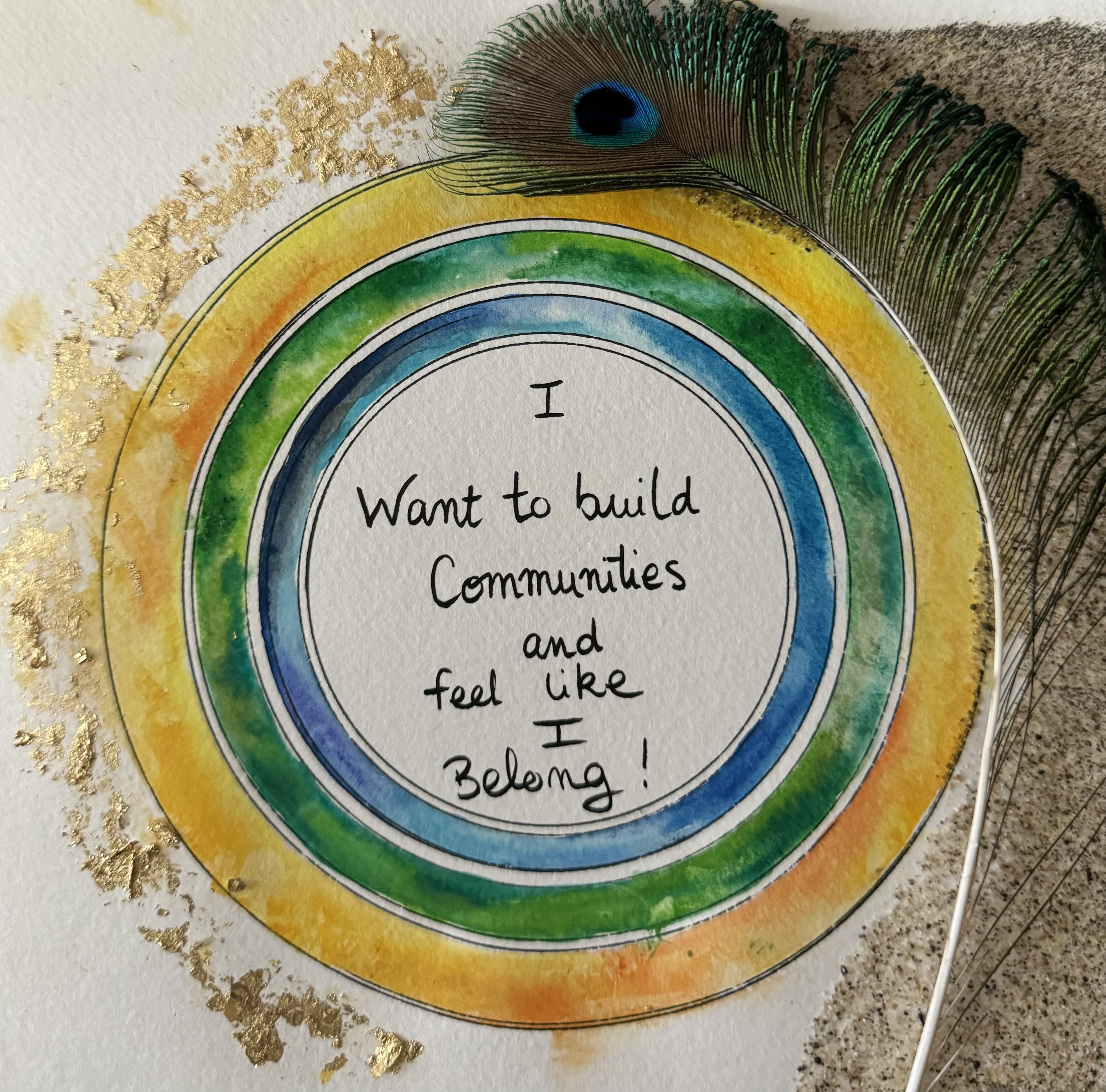
High Holiday Totem Affirmation | Blessing for the Home
Preview
More
Sukkot is a joyous seven-day festival often connected to being thankful for the fall harvest. It takes place on the 15th Hebrew month of Tishrei. Sukkot also commemorates the 40 years of Jewish wandering in the desert after the giving of the Torah in Mt. Sinai. It is a rejoicing and the only festival in which we are commanded to do just that: rejoice. Sukkot, the plural of sukkah, translates to “huts” or “booths.” Sukkot are temporary dwellings we erect that have open walls and open doors. During this time, we invite friends and new friends to eat, rest, and rejoice.
Uzhpizin is Aramaic for “guests,” a reference to the founding figures of the Jewish people who are symbolically invited into the sukkah, along with their divine attributes (a wink at the Sefirot of Kabbalah). For 7 days, a set of biblical figures is invited, and their divine attributes are commemorated.
And.
Día de los Muertos (Day of the Dead) is a Latin festival celebrating and remembering loved ones no longer with us. The festival is a two-day celebration from November 1 to 2, sometimes around the same time as Sukkot. It is believed that on Día de los Muertos, the bridge between the natural and spiritual worlds opens so our deceased loved ones can return and visit us. While the festival is usually associated with Mexico, it is celebrated in different Latin countries in various ways. Families commonly gather in cemeteries at night, light candles, and place flowers on the burial sites of their loved ones. One would think this time to be one of sadness. Yet, it is a time when families sing, laugh, dance, eat, and celebrate their ancestors.
A big part of preparing for Día de los Muertos is the creation of temporary ofrendas (altars) in the home. Stemming from the Aztec practice of leaving food and water for the deceased to help them on their journey to the land of the dead, Latin families decorate ofrendas with flowers (often marigolds in Mexico), pictures of deceased loved ones, souvenirs, and loved one’s favorite foods. The belief is that the offerings help invite the deceased ancestor from the land of the dead; it is a call that gets louder the more one is remembered.
You can find a more detailed explanation of Sukkot and Día de los Muertos on Jewtina y Co.’s Jewish Holiday Resources page and Cultural Ritual Page, which served as a primary reference point for this ritual.
I am a Salvadoran Jew and, for years, have been exploring how I can observe Día de los Muertos in a way that honors my Jewish life. During a leadership retreat at Urban Adamah, a peer shared with me the Indigenous belief that when we heal, we heal the 7 generations that preceded us and the 7 generations that will follow us, likely derived from Lakota tribe beliefs. My journey as a Latin Jewish leader in Los Angeles took me to reconnect with my family line and heal the many scars of colonialism, war, racism, misogyny, and immigration. My ritual aims to honor that process by honoring my ancestors during a time when I am commanded to rejoice.
Step 1: In the days leading up to Sukkot, reflect on 7 ancestors or deceased loved ones you wish to honor. Will you honor them chronologically based on where they are in your family line? Will you honor them based on the divine attributes and how they embody that trait? Will you honor them next to specific founding Jewish figures? This is your practice and your ritual; lean on what feels authentic.
Step 2: Create an ofrenda! You can refer to this Recustom Altar Making Guide or Jewtina y Co.’s Día de los Muertos guide.
An ofrenda generally includes:
Step 3: Make your ofrenda sacred with a blessing. I use the blessing during Havdalah that marks the separation of the holiness of Shabbat from the ordinariness of the rest of the week.
Baruch atah Adonai, hamavdil bayn kodesh lechol.
Blessed are You God, who separates between the holy and the ordinary.
Step 4: It’s Sukkot! Use the chart below to structure each day for the Ushpizin ceremony. You can refer to this booklet by 18Door for a brief review of Sukkot. If you’re building a sukkah, consider the symbolism of building it around your ofrenda. If you cannot build a sukkah, consider the power of your ofrenda and how your ancestors/deceased loved ones are connected to you, with or without a temporary dwelling.
Day
Ancestor or
Deceased Loved One
Divine Attributes
Founding Jewish Figures
1
Chesed, loving kindness
Abraham & Sarah
2
Gevurah, strength
Issac & Rebecca
3
Tiferet, splendor
Jacob & Leah
4
Netzah, eternity
Joseph & Rachel
5
Hod, glory
Moses & Miriam
6
Yesod, foundation
Aaron & Deborah
7
Malkhut, royalty
David & Ruth
Step 5: Ushpizin. Before the meal, we invite these special guests to join us in the sukkah. Although all the names are mentioned each evening, we make a special call to a special guest each night. If that is your practice, you can refer to this excerpt by the Rabbinical Assembly, which has the Ushpizin blessings in English and Hebrew.
Step 6: Take a moment to reflect on the invitation. Speak about the ancestor or deceased loved one you are remembering. Refer to your ofrenda and share a story, idea, or question about them. Reflect on the divine attribute of that day. How did this person embody that? Think about the founding Jewish figure being honored; what traits do they possess similar to the person you remember?
Step 7: Eat! Rejoice! Your sukkah or home is full of so much love and respect. Acknowledge the power you possess by honoring your ancestors or loved ones. You are the link between them and your future generations. They’re with you, always.
My Practice
Below is what my ritual looks like.
Ofrenda:
Ancestors & Deceased Loved Ones (Z”L):
Day
Ancestor or Deceased Loved One
Divine Attributes
Founding Jewish Figures
1
Jaime Salvador Carrillo Torres (Father)
Chesed, loving kindness
Abraham & Sarah
2
José Luis García de León y García (Maternal Grandfather, Mexican Army Veteran)
Gevurah, strength
Issac & Rebecca
3
Afredo Carrillo (Paternal Grandfather, WWII U.S. Army Veteran)
Tiferet, splendor
Jacob & Leah
4
SPC Kaleb Loyer & SPC Matthew Hester (Soldiers I served with in the U.S. Army)
Netzah, eternity
Joseph & Rachel
5
Francisco García de León Hidalgo y Costilla (Great Paternal Grandfather, he fought alongside Pancho Villa in the Mexican Revolution)
Hod, glory
Moses & Miriam
6
The women in my family line who did not have agency or a voice during their time
Yesod, foundation
Aaron & Deborah
7
Miguel Hidalgo y Costilla (Ancestor, Father of the Mexican War of Independence)
Malkhut, royalty
David & Ruth
Ritual by Luis Rene Carillo
Ushpizin | Los Siete Invitados: Sukkot and Día de los Muertos
Preview
More

Mis Antepasado Mayor | My eldest ancestor - A mikvah inspired ritual for a new year
Preview
More
Introduction:
For as long as I could remember, the eye of the fish had great significance in my family of origin. In Moroccan culture, the fish often symbolizes abundance, prosperity, fertility and good fortune. Fish also have spiritual connotations, symbolizing protection. Every Rosh Hashana, my family members would all sit around the festive table and fight for the eye of the fish. Why? Whoever was fast enough to get the eye and eat it in its entirety would have a year filled with clarity.
My ritual is inspired by my Moroccan Jewish roots; however, the fish has great significance also on my Cuban side. In the Cuban culture, fish symbolize various themes, including abundance, nourishment, and community. Given the island's strong connection to the sea, fish often represent the importance of fishing as a livelihood and a source of sustenance. Additionally, in some spiritual beliefs, fish can symbolize transformation and adaptability, reflecting the changing tides of life. For my Cuban Jewish roots, fish meant livelihood as my grandfather, Victor was a fisherman all his life.
I felt a deep connection to the fish, specifically the eye of the fish. The idea of letting go through a ritual of taking your thoughts, fears, feelings, hopes and dreams for the new year and dissolving through water represents or in many ways is similar to Tashlich or Kaparot. The connection of the elements, the casting off to return, to invite and create fresh new connections with the eye of the fish.
The Gematria of Dag (daled, gimmel) is 7. [Editor's note: Hebrew word for "fish" is "dag."] In Judaism, seven is a powerful number.
Instructions:
Setting the Intention: Find a quiet space where you can sit comfortably. Close your eyes and
take a few deep breaths, allowing your body to relax. As you inhale, envision bringing in light
and clarity; as you exhale, let go of any tension or distractions.
Visualizing the Fish: Imagine a serene body of water, its surface glistening in the sunlight. In
this tranquil setting, picture a fish swimming gracefully. This fish embodies clarity and purpose.
As it glides through the water, it moves effortlessly, navigating its environment with ease.
Reflecting on Attributes: Consider the attributes of the fish: Adaptability: Just as the fish
adapts to the currents, reflect on your ability to adjust to life’s changes. What currents have you
navigated this past year?
Perspective: Fish often see the world from below the surface. Allow
yourself to gain a new perspective. What truths have you uncovered that bring clarity to your
life?
Sustenance: The fish sustains itself and those around it. Contemplate how you can nourish
your spirit and those in your community in the year ahead.
Connecting with the New Year: As you visualize the fish, think about the upcoming Jewish
New Year. What intentions do you wish to set? Picture the fish swimming towards a horizon
filled with light, symbolizing new beginnings and opportunities.
Setting Intentions: In this moment of reflection, silently affirm your personal intentions SEVEN TIMES. Personal
intentions are different for everyone. For example:
• "I embrace clarity and purpose as I enter this new year."
• "I release what no longer serves me, welcoming growth and transformation."
• Ani Dag B’Myim
Returning to the Present: Gradually bring your awareness back to your breath. With each
inhalation, feel the energy of clarity filling you. With each exhalation, let go of doubts and
uncertainties. When you feel ready, gently open your eyes, carrying the clarity of the fish with
you into the new year. Embrace the journey ahead with a renewed spirit.
SHANA TOVA!
Ritual by Shoshana Kozaski
showing
1-6
of
13
Page
1
of
3
Featured ritual books
Episode 7 Guidebook - Havdalah: Your Anchor for Starting the Week
Preview

Guide to Making Sacred Space at Home
Preview
Evening Blessing Book
Preview
Jewish Home Blessings
Preview
showing
1-6
of
10
Page
1
of
2