Mix-and-match
Explore content in our extensive library and pull it together into your own Jewish ritual booklet that honors and recognizes whatever life has brought your way.
Share a ritual
Add your own original content as a clip to our extensive library - a poem, blessing, or something else entirely. Someone out there is looking for exactly what only you can create.
Support us
with your donation.
Help us build moments of meaning and connection through home-based Jewish rituals.
Featured ritual books

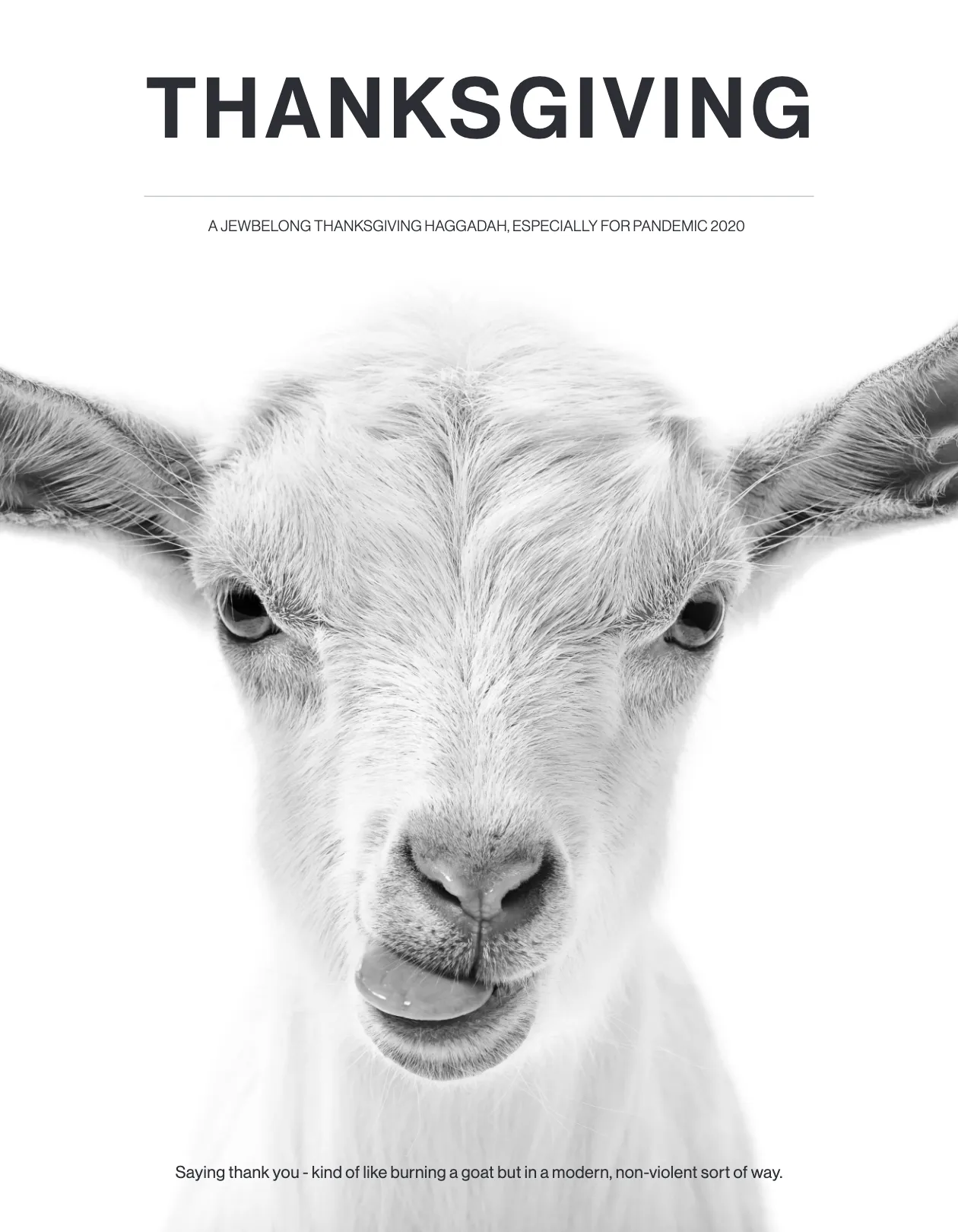
JewBelong's Thanksgiving Haggadah
Preview

Mission From Moses
Preview
showing
1-6
of
19
Page
1
of
4
Featured clips
People have celebrated Rosh Hashanah with a festive gathering since Talmudic times. Weaving together symbolic foods with the familiar structure of a seder helps us start the new year mindfully.
During this brief seder, we’ll make four toasts together and find opportunities for blessing and reflection. Each toast is centered on a way of understanding Rosh Hashanah - as a day of reawakening, of judgment, of remembrance and of recreation. The choice of beverage is up to you!
Introduction to Four Toasts Rosh Hashanah Seder
Preview
More
We have now told the story of Passover. Before we drink the second cup, we pause to name what is in front of us.
The Seder Plate
At the center of our table sits the Seder plate — a map of the Exodus story told through food.
Zeroa — the shank bone
A roasted bone, representing the lamb that Israelite families sacrificed on the night before they left Egypt. Its blood marked their doorposts, and they were passed over.
Beitzah — the roasted egg
A hard-boiled egg, roasted until its shell is marked. The egg represents the festival sacrifice brought to the Temple, and the cycle of life.
Maror — bitter herbs
Usually horseradish. We eat it to feel, even briefly, the bitterness of slavery.
Charoset — the sweet paste
A mixture of apples, nuts, and wine, sweet and dark. It represents the mortar the Israelite slaves used to build Pharaoh's cities.
Karpas — parsley
Fresh green herbs, representing spring and the promise of new life.
Chazeret — romaine lettuce
A second bitter herb.
We have now told the story of Passover. Before we drink the second cup, we pause to name what is in front of us.
The Seder Plate
At the center of our table sits the Seder plate — a map of the Exodus story told through food.
Zeroa — the shank bone
A roasted bone, representing the lamb that Israelite families sacrificed on the night before they left Egypt. Its blood marked their doorposts, and they were passed over.
Beitzah — the roasted egg
A hard-boiled egg, roasted until its shell is marked. The egg represents the festival sacrifice brought to the Temple, and the cycle of life.
Maror — bitter herbs
Usually horseradish. We eat it to feel, even briefly, the bitterness of slavery.
Charoset — the sweet paste
A mixture of apples, nuts, and wine, sweet and dark. It represents the mortar the Israelite slaves used to build Pharaoh's cities.
Karpas — parsley
Fresh green herbs, representing spring and the promise of new life.
Chazeret — romaine lettuce
A second bitter herb.
At the rising sun and at its going down; We remember them.
At the blowing of the wind and in the chill of winter; We remember them.
At the opening of the buds and in the rebirth of spring; We remember them.
At the blueness of the skies and in the warmth of summer; We remember them.
At the rustling of the leaves and in the beauty of the autumn; We remember them.
At the beginning of the year and when it ends; We remember them.
As long as we live, they too will live, for they are now a part of us as We remember them.
When we are weary and in need of strength; We remember them.
When we are lost and sick at heart; We remember them.
When we have decisions that are difficult to make; We remember them.
When we have joy we crave to share; We remember them.
When we have achievements that are based on theirs; We remember them.
For as long as we live, they too will live, for they are now a part of us as, We remember them.
We Remember Them by Sylvan Kamens & Rabbi Jack Riemer
Preview
More
As we enter a New Year without our loved one, our memories of them and the experiences we shared with them may begin to feel further away. This activity invites us into presence with our memories and creates a physical keepsake we can revisit. You may want to begin collecting memories during Rosh Hashanah, and continue adding to the jar throughout the year.
To start, place a large jar, decorated box or vessel in a convenient location. Next, whenever you have a memory of your loved one, write it down on a slip of paper and place it in the jar. If a memory crosses your mind and you don’t have access to paper, record a voice memo or type it into your phone so you can transfer it to paper later. Your memories can be simple, such as a holiday tradition, your loved one’s favorite food, or of an adventure or experience you shared.
Any time you wish to recall their lives, take a note from the jar. You can also revisit memories at the start of another New Year, when you say Yizkor or Kaddish, each time you visit their grave, or mark their birthday or yahrzeit. You can create a scrapbook with photos that correspond to the memories. You can read the notes together with other family members or friends and then share the story of the memory together. Or, invite several people to share stories at your Rosh Hashanah seder, Yom Kippur break fast or Sukkot gathering.
—
This ritual was adapted by Chloe Nassau, based on a creation from the Center for Loss & Renewal, Rabbi Benyamin Cirlin, LCSW
showing
1-6
of
276
Page
1
of
46