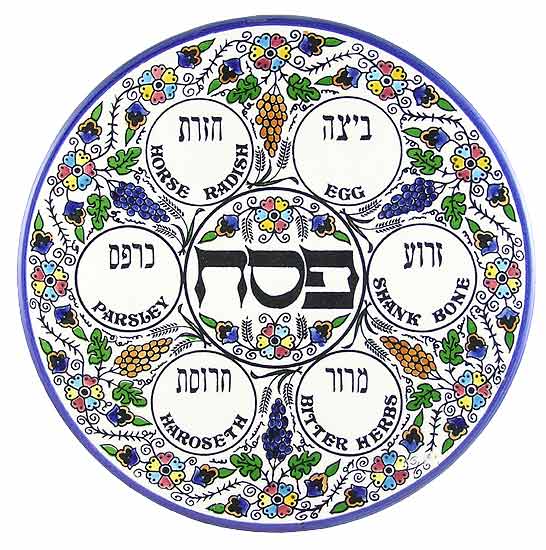
Seder Plate Symbols
Preview
More
In the early 1980s, while speaking at Oberlin College Hillel (the campus Jewish organization), Susannah Heschel, a well-known Jewish feminist scholar (and daughter of Rabbi Abraham Joshua Heschel), was introduced to an early feminist Haggadah that suggested adding a crust of bread on the seder plate, as a sign of solidarity with Jewish lesbians (which was intended to convey the idea that there’s as much room for a lesbian in Judaism as there is for a crust of bread on the seder plate).
Heschel felt that to put bread on the seder plate would be to accept that Jewish lesbians and gay men violate Judaism like chumetz [leavened food] violates Passover.
So at her next seder, she chose an orange as a symbol of inclusion of gays and lesbians and others who are marginalized within the Jewish community. She offered the orange as a symbol of the fruitfulness for all Jews when lesbians and gay men are contributing and active members of Jewish life.
In addition, each orange segment had a few seeds that had to be spit out — a gesture of spitting out, repudiating the homophobia of Judaism. While lecturing, Heschel often mentioned her custom as one of many feminist rituals that have been developed in the last 20 years.
Heschel herself wrote:
Somehow, though, the typical patriarchal maneuver occurred: My idea of an orange and my intention of affirming lesbians and gay men were transformed. Now the story circulates that a man said to me that a woman belongs on the bimah [podium of a synagogue] as an orange on the seder plate. A woman’s words are attributed to a man, and the affirmation of lesbians and gay men is erased. Isn’t that precisely what’s happened over the centuries to women’s ideas?
Orange on the Seder Plate
Preview
More
Stand With Refugees This Passover
Preview
More
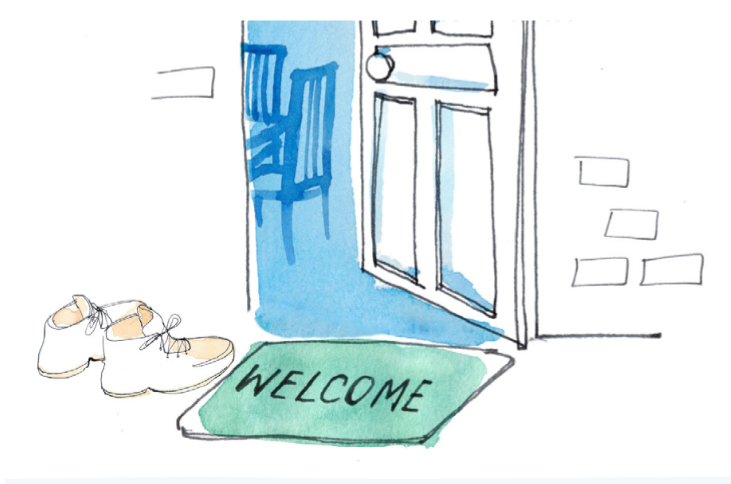
Pesach is a time of inclusion.
On seder night, there are two moments where we metaphorically open our doors and invite others in. One is at the opening of the Magid portion of the seder, when we say, “All who are hungry come and eat.” There is a beautiful message here: we were once slaves; poor and hungry, and we remember our redemption by sharing what we have with others.
The other, comes towards the end of the seder, when we have the custom of pouring a fifth cup of wine, which we claim is for Elijah the Prophet. This is a statement of faith, a statement that says that although we are a free people, our redemption is not yet complete, and we believe that it will come.
From the most downtrodden to the most celebrated, the message is clear: everyone is welcome and everyone is necessary. Why is it that we go out of our way to include all at our seder table? Perhaps it is because when we make room for others, we have the opportunity to make room for ourselves as well. In fact, the Mishnah (Pesahim 10:5) teaches us that:
בכל דור ודור חייב אדם לראות את עצמו כאילו הוא יצא ממצרים In every generation a person is obligated to see themselves as if they left Egypt
The seder presents us with the obligation of identifying with the generation that left Egypt and internalizing that experience. And through that internalization, we come to feel the redemption as if it was our own as well to - לראות את עצמו. Further, the reliving of the story of the Exodus affords us the opportunity see one’s true self. It is only when we are able to see ourselves clearly, that we are able to be redeemed. But perhaps the only way we are able to see ourselves, is when we are truly able to see those around us. This message of inclusion is Pardes’s message too, and our hope is that this Haggadah Companion which offers something for everyone, will add new meaning to your seder and help bring the Jewish people a little closer together.
Introduction
Preview
More
The four cups of wine are traditionally linked to the four promises God made to the children of Israel:
As it is written: "I will bring you out from under the burdens of Egypt. I will deliver you from bondage. I will redeem you with an outstretched arm and great judgements. I will take you to be my people and I will be your God" (Exodus 6: 6-7).
Tonight we dedicate the four cups of wine to important or inspirational women in our lives- individually or as a community- who have worked towards redemption and freedom in their own ways. Please take a minute to think about who you would like to dedicate the first cup to.
Traditional Masculine Blessing
Baruch Atah Adonai Eloheinu Melech ha'olam borei p'ri hagafen.
Traditional Feminine Blessing
B'rucha At Yah Eloheinu Ruach ha'olam boreit p'ri hagafen.
You are blessed, Our God, Spirit of the World, who creates the fruit of the vine.
Non-gendered Blessing
The following alternative kiddush was written by Marcia Falk, a prominent Jewish feminist liturgist. Her blessings avoid the problem of God’s gender because they do not reference God as a person-like being. In addition, they locate the power of blessing with the people ("Let us bless" rather than with God’s inherent blessedness ("Blessed are you")
N’vareykh et Eyn Hahayim matzmihat p’ri hagefen.
Let us bless the Source of Life that ripens the fruit on the vine.
Some of this clip originally appeared on Ritualwell.org.
Kadesh
Preview
More
Read and Discuss
The Three Levels of Oppression: Ilan Gur Ze'ev
The First level:
In our opinion, the first level of oppression, primitive oppression, is expressed by inflicting aggressive force (physical violence) in order to force someone to act against their will and interest. Uprising against this kind of oppression is possible with different levels of success. It is possible to diminish its influence and there is hope for liberation from this level of oppression.
In this type of oppression the oppressor is the more oppressed than the one he is oppressing.
The Second Level of Oppression:
The second level of oppression isideological oppression, in which the oppressor manipulates (lies) the oppressed to the point of identification, the oppressed identifies with the values and interests of his oppressor. The identification is an important element in blurring the consciousness of the oppressed to the existence of the oppression. This system lowers the oppressed self-consciousness partly because of his own actions. These actions are drawn to the system's existing movement, it straightens and sophisticates the existing order and then rebuilds its boundaries. Examples are ideological expression as a nationalism, "free initiative" and Marxism. Against this existing oppression there is a hope to activate (as Marx in his time) a critical ideology (creating awareness) and to raise the oppressed to resistance against his oppressor. This level of oppression, moves from the personal level (private) to the class or group level, from the personal to the collective, it is far more efficient than the first level of oppression, because it exceeds physical oppression as the oppressors’ main means of manipulation. In correlation the liberation from the second level of oppression is more problematic and as usual evolves into a more sophisticated type of oppression. As long as the uprisers are weak, they will focus their actions against the systems structure. Once stronger and their control is more established, the oppressed will take over the roles of judges and legislators, and teachers and psychologists will be sent against their enemies to mainly treat the soul. Yet there is still place for hope.
Third level of oppression:
The third level of oppression, is a faceless oppression without class identification, successful enough to be accepted by the oppressed with internalization and devotion.This oppression is conditioned by the "narrowing of the dialogue" and sterilization of the antagonist dimension in the taken-for-granted well know reality, and their undisturbed actions of controlling forces in the system.Markuza is on the verge of pessimism in view of what we call oppression of the third level, in which the structure of the oppressed, up to the point of where the need or capability of rebellion will not exist. This is described as the rooting and destruction of the new: diseases, necessities and needs; illness, drugs and poisons, antidotes to create a new world of symbols that sum up the founding of "new man" that will never want or be capable of emancipation.
-Ilan Gur Ze'ev.
Oppression
Preview
More
Seder Plate Symbols
Preview
More
In the early 1980s, while speaking at Oberlin College Hillel (the campus Jewish organization), Susannah Heschel, a well-known Jewish feminist scholar (and daughter of Rabbi Abraham Joshua Heschel), was introduced to an early feminist Haggadah that suggested adding a crust of bread on the seder plate, as a sign of solidarity with Jewish lesbians (which was intended to convey the idea that there’s as much room for a lesbian in Judaism as there is for a crust of bread on the seder plate).
Heschel felt that to put bread on the seder plate would be to accept that Jewish lesbians and gay men violate Judaism like chumetz [leavened food] violates Passover.
So at her next seder, she chose an orange as a symbol of inclusion of gays and lesbians and others who are marginalized within the Jewish community. She offered the orange as a symbol of the fruitfulness for all Jews when lesbians and gay men are contributing and active members of Jewish life.
In addition, each orange segment had a few seeds that had to be spit out — a gesture of spitting out, repudiating the homophobia of Judaism. While lecturing, Heschel often mentioned her custom as one of many feminist rituals that have been developed in the last 20 years.
Heschel herself wrote:
Somehow, though, the typical patriarchal maneuver occurred: My idea of an orange and my intention of affirming lesbians and gay men were transformed. Now the story circulates that a man said to me that a woman belongs on the bimah [podium of a synagogue] as an orange on the seder plate. A woman’s words are attributed to a man, and the affirmation of lesbians and gay men is erased. Isn’t that precisely what’s happened over the centuries to women’s ideas?
Orange on the Seder Plate
Preview
More
Stand With Refugees This Passover
Preview
More
Pesach is a time of inclusion.
On seder night, there are two moments where we metaphorically open our doors and invite others in. One is at the opening of the Magid portion of the seder, when we say, “All who are hungry come and eat.” There is a beautiful message here: we were once slaves; poor and hungry, and we remember our redemption by sharing what we have with others.
The other, comes towards the end of the seder, when we have the custom of pouring a fifth cup of wine, which we claim is for Elijah the Prophet. This is a statement of faith, a statement that says that although we are a free people, our redemption is not yet complete, and we believe that it will come.
From the most downtrodden to the most celebrated, the message is clear: everyone is welcome and everyone is necessary. Why is it that we go out of our way to include all at our seder table? Perhaps it is because when we make room for others, we have the opportunity to make room for ourselves as well. In fact, the Mishnah (Pesahim 10:5) teaches us that:
בכל דור ודור חייב אדם לראות את עצמו כאילו הוא יצא ממצרים In every generation a person is obligated to see themselves as if they left Egypt
The seder presents us with the obligation of identifying with the generation that left Egypt and internalizing that experience. And through that internalization, we come to feel the redemption as if it was our own as well to - לראות את עצמו. Further, the reliving of the story of the Exodus affords us the opportunity see one’s true self. It is only when we are able to see ourselves clearly, that we are able to be redeemed. But perhaps the only way we are able to see ourselves, is when we are truly able to see those around us. This message of inclusion is Pardes’s message too, and our hope is that this Haggadah Companion which offers something for everyone, will add new meaning to your seder and help bring the Jewish people a little closer together.
Introduction
Preview
More
The four cups of wine are traditionally linked to the four promises God made to the children of Israel:
As it is written: "I will bring you out from under the burdens of Egypt. I will deliver you from bondage. I will redeem you with an outstretched arm and great judgements. I will take you to be my people and I will be your God" (Exodus 6: 6-7).
Tonight we dedicate the four cups of wine to important or inspirational women in our lives- individually or as a community- who have worked towards redemption and freedom in their own ways. Please take a minute to think about who you would like to dedicate the first cup to.
Traditional Masculine Blessing
Baruch Atah Adonai Eloheinu Melech ha'olam borei p'ri hagafen.
Traditional Feminine Blessing
B'rucha At Yah Eloheinu Ruach ha'olam boreit p'ri hagafen.
You are blessed, Our God, Spirit of the World, who creates the fruit of the vine.
Non-gendered Blessing
The following alternative kiddush was written by Marcia Falk, a prominent Jewish feminist liturgist. Her blessings avoid the problem of God’s gender because they do not reference God as a person-like being. In addition, they locate the power of blessing with the people ("Let us bless" rather than with God’s inherent blessedness ("Blessed are you")
N’vareykh et Eyn Hahayim matzmihat p’ri hagefen.
Let us bless the Source of Life that ripens the fruit on the vine.
Some of this clip originally appeared on Ritualwell.org.
Kadesh
Preview
More
Read and Discuss
The Three Levels of Oppression: Ilan Gur Ze'ev
The First level:
In our opinion, the first level of oppression, primitive oppression, is expressed by inflicting aggressive force (physical violence) in order to force someone to act against their will and interest. Uprising against this kind of oppression is possible with different levels of success. It is possible to diminish its influence and there is hope for liberation from this level of oppression.
In this type of oppression the oppressor is the more oppressed than the one he is oppressing.
The Second Level of Oppression:
The second level of oppression isideological oppression, in which the oppressor manipulates (lies) the oppressed to the point of identification, the oppressed identifies with the values and interests of his oppressor. The identification is an important element in blurring the consciousness of the oppressed to the existence of the oppression. This system lowers the oppressed self-consciousness partly because of his own actions. These actions are drawn to the system's existing movement, it straightens and sophisticates the existing order and then rebuilds its boundaries. Examples are ideological expression as a nationalism, "free initiative" and Marxism. Against this existing oppression there is a hope to activate (as Marx in his time) a critical ideology (creating awareness) and to raise the oppressed to resistance against his oppressor. This level of oppression, moves from the personal level (private) to the class or group level, from the personal to the collective, it is far more efficient than the first level of oppression, because it exceeds physical oppression as the oppressors’ main means of manipulation. In correlation the liberation from the second level of oppression is more problematic and as usual evolves into a more sophisticated type of oppression. As long as the uprisers are weak, they will focus their actions against the systems structure. Once stronger and their control is more established, the oppressed will take over the roles of judges and legislators, and teachers and psychologists will be sent against their enemies to mainly treat the soul. Yet there is still place for hope.
Third level of oppression:
The third level of oppression, is a faceless oppression without class identification, successful enough to be accepted by the oppressed with internalization and devotion.This oppression is conditioned by the "narrowing of the dialogue" and sterilization of the antagonist dimension in the taken-for-granted well know reality, and their undisturbed actions of controlling forces in the system.Markuza is on the verge of pessimism in view of what we call oppression of the third level, in which the structure of the oppressed, up to the point of where the need or capability of rebellion will not exist. This is described as the rooting and destruction of the new: diseases, necessities and needs; illness, drugs and poisons, antidotes to create a new world of symbols that sum up the founding of "new man" that will never want or be capable of emancipation.
-Ilan Gur Ze'ev.
Oppression
Preview
More
showing
1-6
of
134
Page
1
of
23